
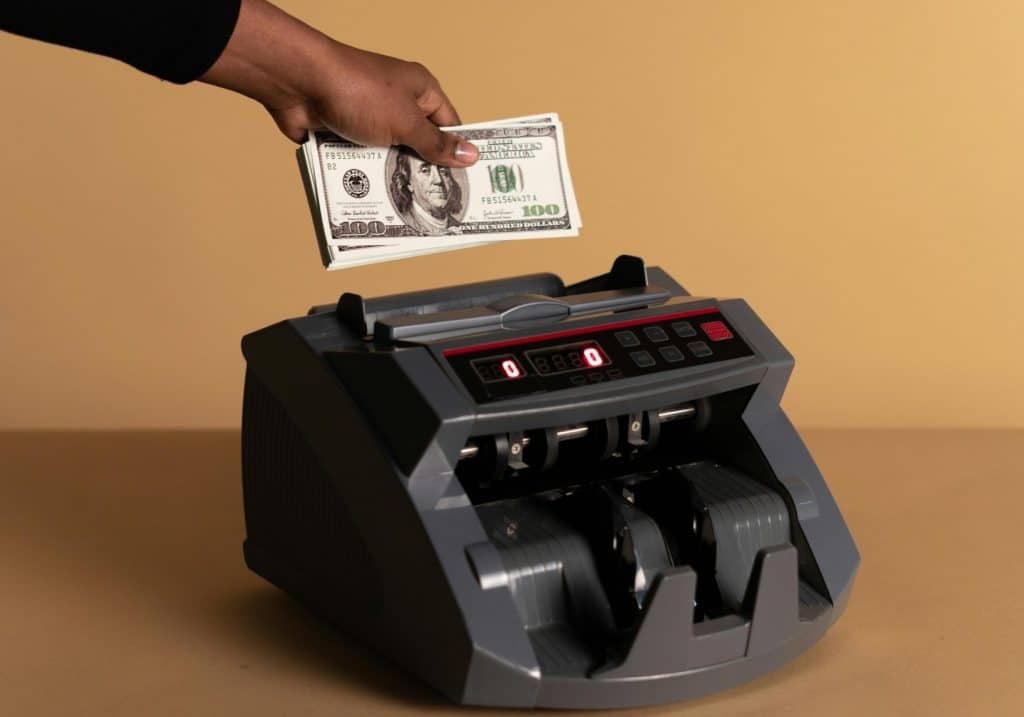
Cash is not going away. Despite everything you hear about contactless payments and digital wallets, plenty of businesses still deal with a steady flow of physical money every single day. Pubs, convenience stores, leisure venues, independent shops, hospitality businesses. For all of them, handling cash is just part of the job.
The problem is that many businesses treat it like a low-priority task. And that tends to get expensive.
Good cash management matters more than most people give it credit for. A miscount here, a rushed closing procedure there, a till that never quite balances. None of it seems like a big deal in the moment. But over weeks and months, those small, unremarkable errors have a way of adding up into something you can no longer ignore.
The Problem Is Rarely Dramatic
If businesses were losing large sums overnight through obvious theft or major accounting failures, someone would notice quickly. That is not typically how it happens.
Cash losses tend to be slow and quiet. A float gets counted wrong during a hectic shift change. A figure gets entered incorrectly into a spreadsheet. A couple of bills stick together during a late-night count. These are not extraordinary events. They are completely routine in environments where staff are simultaneously managing customers, queues, deliveries, and whatever else is happening that day.
The pressure to move fast makes things worse. Retail and hospitality teams are expected to work quickly, and end-of-day cash handling often happens when everyone is tired and just trying to get home. Accuracy suffers. Even experienced employees make mistakes when they are rushing, and nobody should be surprised by that.
The Hidden Cost Nobody Talks About
When businesses think about cash losses, they usually picture money going missing from the register. But that is only part of the picture.
Think about what happens around a discrepancy. A manager has to investigate. Someone reviews records. People spend time trying to figure out where the numbers stopped matching. That administrative work produces nothing. It just eats into hours that could have been spent elsewhere.
Multiply that across multiple shifts, multiple employees, or multiple locations, and the time cost becomes significant. A process that takes an extra ten or fifteen minutes per day might seem trivial. Over a year, it adds up to real payroll hours spent chasing numbers.
The Effect on Your Team
There is also something less tangible that tends to get overlooked: what repeated discrepancies do to workplace culture.
When cash figures are consistently off and nobody can explain why, it creates tension. Team members may start to feel like they are being watched or suspected, even if nothing is ever said directly. That atmosphere is uncomfortable, and over time it erodes trust in ways that are difficult to rebuild.
For managers, the uncertainty is frustrating in its own way. If you cannot tell whether a problem comes from a training gap, a process issue, or something more serious, it is hard to know what to fix.
Smaller Businesses Often Have It Harder
Large retail chains tend to have formal reconciliation procedures and dedicated finance staff. That structure provides a buffer against routine errors.
Independent businesses frequently do not have that. A local cafe owner might be handling end-of-day cash balancing personally after a ten-hour shift. A family-run shop might rely on handwritten records or a basic spreadsheet that has not changed in years. Those approaches can hold up fine for a while, but they become harder to sustain as transaction volumes grow or staff turnover increases.
Seasonal businesses face their own version of this challenge. When the holiday season arrives or summer gets busy, cash volumes spike at exactly the moment when temporary staff are being brought in and training is being rushed. Mistakes become more likely precisely when the stakes are higher.
What Actually Helps
Technology has its role, but the businesses that see the most improvement usually get there through better processes rather than by removing people from the equation entirely.
Consistent procedures make a real difference. When every shift follows the same counting routine, confusion drops. When figures are recorded immediately rather than recalled from memory twenty minutes later, accuracy improves. When staff understand exactly how cash handling works and why it matters, they approach it more carefully.
Simple things genuinely help. Organizing bills and coins consistently. Having one standard handover process. Making sure reconciliation happens at a set time rather than whenever someone gets around to it.
None of that is complicated. But it requires treating cash handling as a proper operational process rather than a task you squeeze in at the end of the day.
A Few Dollars a Day Is Not a Small Problem
Businesses put enormous effort into customer experience, marketing, and sales. The back-of-house processes often get much less attention. But something as routine as how cash gets counted at the end of a shift can have a surprisingly direct effect on profitability.
Cash handling errors persist not because they are impossible to solve, but because they are easy to underestimate. They happen in small increments, hidden inside everyday routines, and they rarely cause enough alarm to force anyone to act until the cumulative damage is already done.
A few dollars missing from a register each evening might not sound like much. Over the course of a year, though, it can add up to a substantial figure. And ongoing inaccuracies are usually pointing at something bigger: inefficiencies in processes, gaps in training, or workflows that have been cobbled together over time and never properly reviewed.