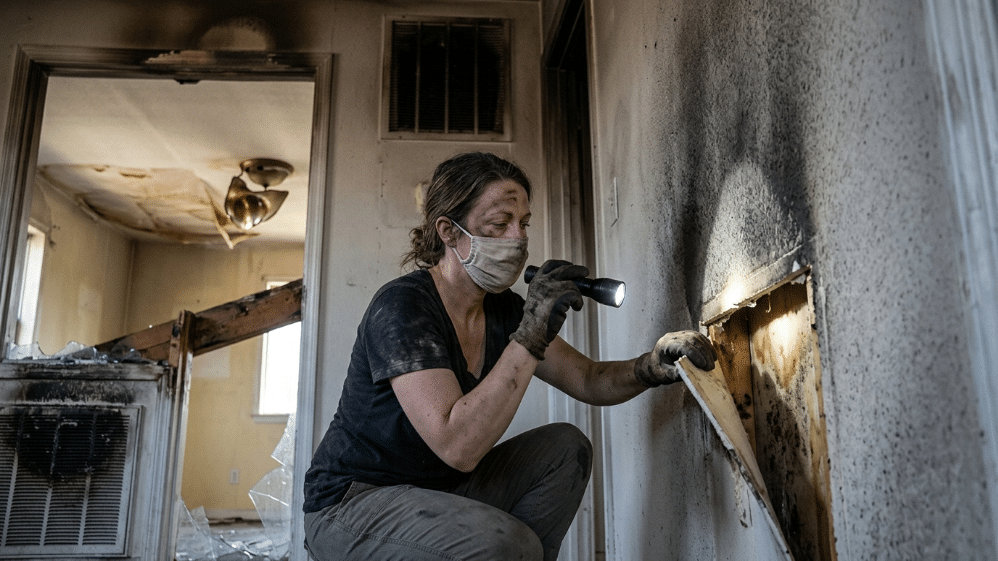
Most people think putting out the fire is the hard part. It is not. The aftermath is where things get complicated, and it moves faster than most homeowners expect.
The visible destruction, the charred walls, the ruined furniture, the broken glass, is actually the most straightforward part of what a fire leaves behind.
What tends to catch people off guard is everything happening inside the structure after the flames are gone, in places nobody thinks to look until the damage is already serious.
Soot Is Already Working Against You
The moment a fire goes out, soot starts bonding to surfaces. Not sitting on them, actually really bonding to them. Walls, ceilings, countertops, fabrics, all of them absorb soot within minutes, and the window for easy removal closes fast.
By the end of the first day, soot has worked its way into drywall and wood grain in ways that go well beyond surface cleaning. By 72 hours, metals are corroding, and plastics have stained permanently. The fire has been out the whole time, but the damage has not stopped.
Soot is also not one thing. It is a chemical mixture of whatever burned: carpet backing, foam cushions, plastic fixtures, treated timber. Each material leaves behind its own toxic residue when it combusts, and that residue keeps releasing compounds into the air until it is properly removed, not wiped down, not painted over, removed.
This is why professional fire damage restoration needs to start the moment a property is cleared for entry. Every hour of delay is an hour the damage compounds on its own. Families who act fast consistently end up with smaller bills, shorter timelines, and far fewer surprises showing up months down the road.
Smoke Went Further Than the Fire Did
The staining visible on the walls is the obvious part of the smoke problem. What is harder to see is where the smoke actually traveled before anyone could stop it.
Smoke moves through HVAC systems, into wall cavities, under flooring, and deep into insulation. It settles in every gap it finds and keeps releasing toxins into the air for days after the fire is out. A house that smells tolerable on day one can become a real health problem by the end of the week.
The particles are small enough to reach deep into lung tissue, and what they carry depends entirely on what was burning.
In homes built before the 1980s, that often includes disturbed asbestos from floor tiles or pipe insulation, which fire can dislodge and suspend in the air. For children and elderly residents, the air inside a fire-damaged home is not just unpleasant. It is a health risk that persists until the source materials are dealt with properly.
Getting the air tested before anyone moves back in is not overcautious. It is the right call.
Water Is the Part Nobody Warned You About
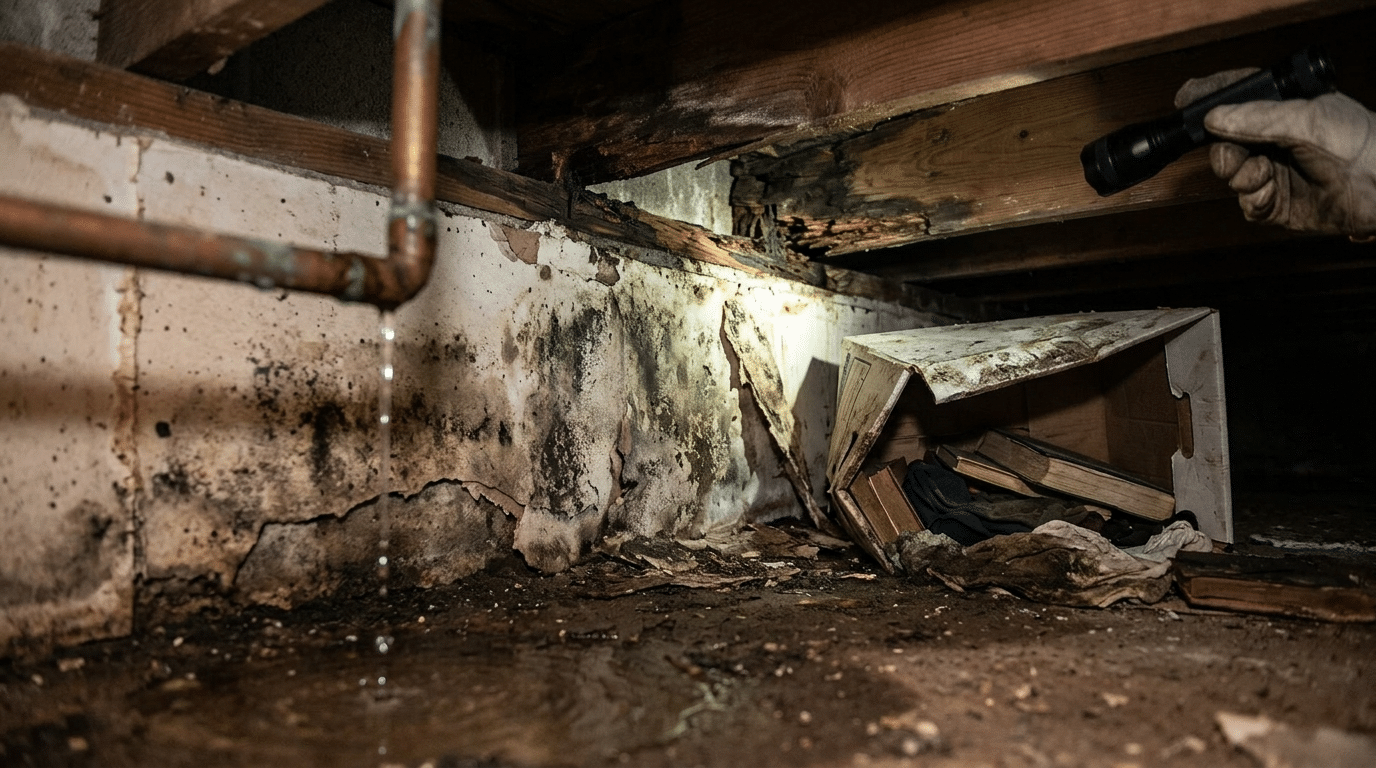
Nearly 330,000 residential structure fires happen in the United States every year, and the vast majority involve significant water intrusion alongside the fire damage itself. Most homeowners stay focused on what burned and miss the water problem entirely until mold forces the issue months later.
Mold can begin growing on wet surfaces within 24 to 48 hours of water exposure. Within a week it can spread through an entire floor of a house, reaching rooms that had nothing to do with the original fire.
By that point, what started as a fire recovery has turned into a mold remediation project on top of everything else, which is a significantly bigger and more expensive problem to resolve.
The Structure May Not Be What It Looks Like
Fire weakens buildings in ways that do not show on the surface. Wooden beams lose strength at high temperatures without fully charring. Steel warps. Concrete develops internal cracking.
A wall that looks perfectly solid may have lost a real portion of its load-bearing capacity, and there is no way to know without a proper assessment.
People have been seriously hurt during post-fire cleanup by moving through or working on structurally compromised areas they thought were safe. A structural evaluation is not optional. It comes before everything else.
What to Do in the First 48 Hours
How you respond in the first two days has a direct effect on the scope and cost of everything that follows.
- Document everything on video before anything is moved or touched. Insurance claims depend on it.
- Do not run the HVAC system. It will carry soot and contaminated particles into every room.
- Do not wipe soot with a wet cloth. It embeds deeper when wet and becomes significantly harder to remove.
- Stay out of areas where structural safety is unclear until a professional confirms otherwise.
- Call your insurer and a certified restoration crew at the same time, not one after the other.
The fire lasts for hours. What it sets in motion can run for months, and the difference between a recovery that stays manageable and one that spirals almost always comes down to what happened in those first two days. Getting it right early is not just about saving money. It is about not having to relive the worst part of it all over again six months later.