Joni Mitchell’s net worth is estimated at $150 million.
That number is easy to say. What is harder to explain is how she got there without doing most of what wealthy artists do.
No catalog sale. No sold-out stadium tours for the past two decades. No perfume line or fashion collaboration. No private equity deal or streaming exclusivity contract.
Just ownership. Royalties. And time.
Most artists from her generation are nowhere near this wealthy. Some fought for years to reclaim masters they signed away at 22. Others took the lump sum and spent it.
Mitchell did neither. That decision, to hold her ground on catalog rights, is still writing her checks in today’s time.
This post breaks down where the $150 million came from and why her approach differs from her peers’.
Essential Details About Joni Mitchell
|
Detail |
Information |
|
Full Name |
Roberta Joan Mitchell |
|
Date of Birth |
November 7, 1943 |
|
Age |
82 (as of 2026) |
|
Nationality |
Canadian-American |
|
Profession |
Singer-songwriter, painter, multi-instrumentalist |
|
Primary Income |
Music royalties, catalog ownership, and real estate |
|
Real estate holdings |
Bel Air (LA), Laurel Canyon (LA), Sechelt (BC) |
The $150 million figure comes from Forbes estimates, which range between $130–$155 million. The variance exists because music catalog valuations are private and notoriously difficult to pin down precisely.
How It All Started for Joni Mitchell

Joni Mitchellwas born Roberta Joan Anderson on November 7, 1943, in Fort Macleod, Alberta, Canada.
She contracted polio at age nine. The disease left permanent damage to her left hand, which meant she could not form standard guitar chord shapes.
So she invented her own tunings. What started as a workaround became her musical signature. Strange, open, resonant chords.
They influenced musicians who had full use of both hands and still could not figure out what she was doing.
After graduating high school (on the second attempt), she enrolled at Alberta College of Art in Saskatoon. She left before finishing the program to play in coffeehouses.
By the mid-1960s, she was performing regularly. In 1965, she married folk singer Chuck Mitchell. They divorced in 1967.
By 1968, she had a record deal. David Crosby championed her to Reprise Records, and her debut album Song to a Seagull came out that year.
She was 24 years old and had already been through more than most people twice her age ever would.
How Joni Mitchell Music Career Built the Fortune

Mitchell released 19 studio albums between 1968 and 2007. That run produced several of the most critically acclaimed records in the history of pop music.
Blue (1971) is the one people keep coming back to. Rolling Stone has ranked it among the greatest albums ever recorded, and that assessment has not changed in 50 years.
It was Mitchell at her most exposed: raw, personal, harmonically strange in the best way. It is also one of the most-streamed folk albums on any platform.
Court and Spark (1974) was her biggest commercial seller. Ladies of the Canyon (1970) included “Big Yellow Taxi,” which has been covered so many times that most people who know the song do not know she wrote it.
The numbers behind the career:
- 11 Grammy Awards, including a Lifetime Achievement Award in 2002
- Rock and Roll Hall of Fame induction in 1997
- MusiCares Person of the Year in 2022
- Library of Congress Gershwin Prize for Popular Song in 2023, the first Canadian woman to receive it
- First Grammy performance of her career at the 2024 ceremony, where Taylor Swift was photographed wiping tears from her eyes
That last detail is worth noting. Mitchell was 80 years old. She had survived a brain aneurysm in 2015 that most people did not expect her to recover from.
And she was performing at the Grammys for the first time. The audience gave her a standing ovation that lasted several minutes.
How Joni Mitchell Makes Money Today
This is where most posts get lazy. They list “music royalties” and move on. Here is what that actually looks like.
1. Music Royalties and Streaming

Mitchell’s annual royalty income is estimated at $650,000 to $850,000, according to industry filings cited by Finance Monthly.
That figure covers streaming, licensing, and catalog income. It does not include one-off deals or reissue revenue.
“Both Sides Now” has been recorded by more than 1,500 artists across six decades. Every cover generates publishing royalties back to Mitchell.
“River” is a song that has nothing to do with Christmas except for its winter setting. It still generates significant streaming spikes on its own every December.
Her Joni Mitchell Archives series (Vol. 1 through 4, released since 2020) has produced approximately $15 million in catalog reissue revenue.
2. Publishing Catalog
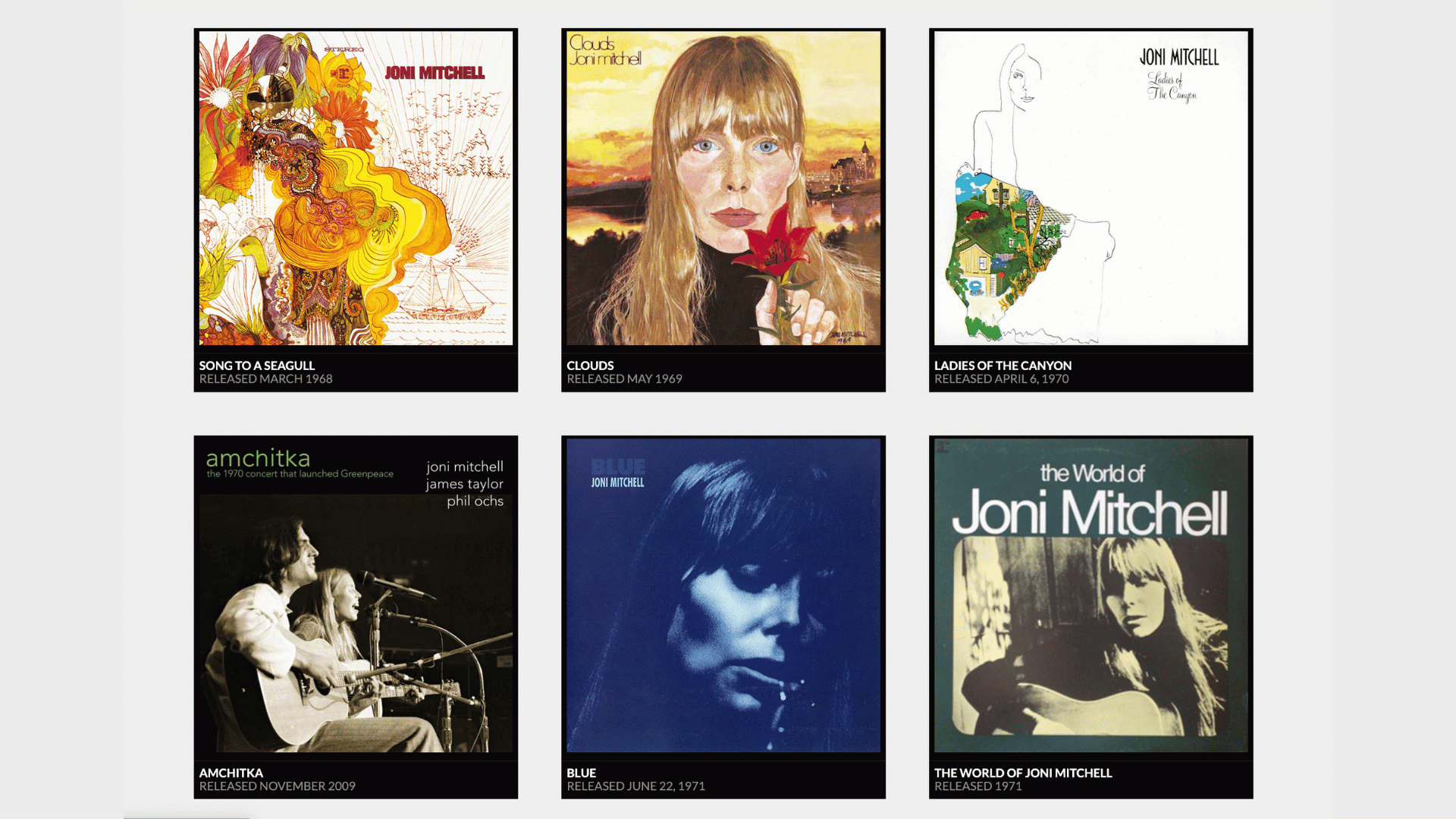
The publishing catalog alone is valued at an estimated $80–$100 million. That is the number that underpins her net worth more than anything else.
In 2021, she signed a global publishing deal with Reservoir Media. This was not a sale. She retained ownership.
It was an administration deal, meaning Reservoir handles licensing and collection on her behalf while Mitchell keeps the underlying rights.
3. Licensing and Sync Deals

Source: Rolling Stone
Her music has been licensed for films, TV series, and advertising.
The Chanel No. 5 perfume campaign is one documented commercial placement. “Both Sides Now,” “A Case of You,” and “Free Man in Paris” regularly appear on film and TV soundtracks.
Each placement generates sync fees that flow back to her.
4. Live Performances

Source: The Recording Academy
Mitchell has not toured regularly since the early 2000s.
Health challenges, including post-polio syndrome in the 1990s and a ruptured brain aneurysm in 2015, reduced her public presence significantly.
Her return came through “Joni Jam” events organized by Brandi Carlile in 2022 and 2023. Mitchell performed in an informal setting.
The musicians around her looked like they could not believe they were in the same room. These were not tours. But they were performances, and they mattered.
5. Painting and Visual Art

Mitchell designed most of her own album covers. Her original paintings have sold to private collectors.
As her health limits new output, the existing body of work appreciates in value. Her art collection, including her own paintings, is estimated at $5–$10 million.
Why Owning Her Master’s Made Her Rich
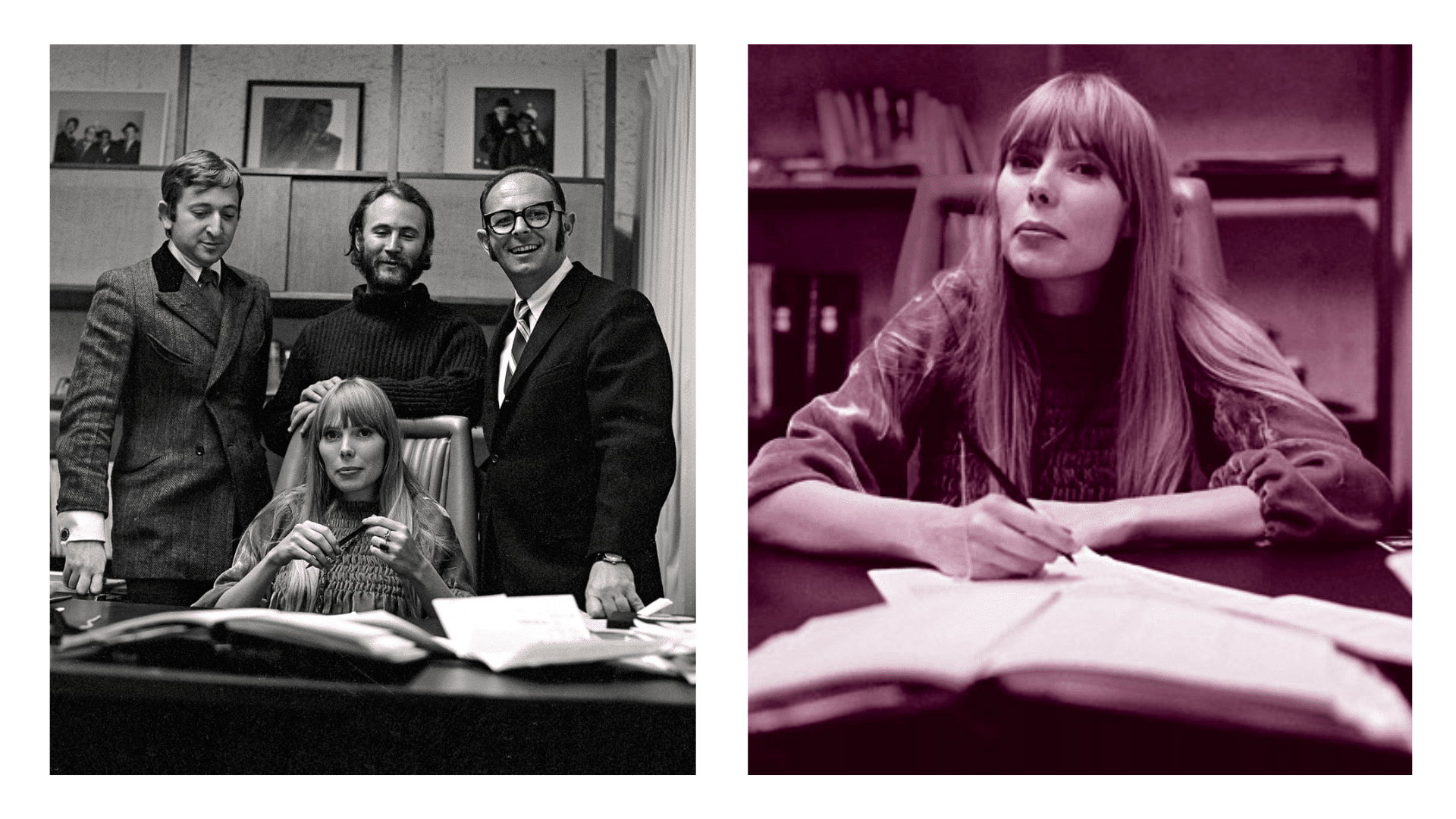
This is the part of the story that most posts skip in a single sentence. It deserves more than that.
In the 1970s, the standard arrangement in the music industry was simple: the label owned the masters. Artists received advances, but the underlying recordings, the actual master files, belonged to the record company.
Most artists signed these deals without fully understanding what they were giving away.
Mitchell held her ground. She owns her master recordings and her publishing rights outright. She self-produced nearly every album she released.
This was not standard practice. For a woman in the 1970s music industry, it was close to unheard of.
What that means financially is straightforward. Every time Blue is streamed, every time a teenager discovers “Big Yellow Taxi”: the money flows to Mitchell, not to a label.
Compare that to what happened to artists who did not hold their rights. Many spent years and millions of dollars in legal battles just to reclaim recordings they had already made.
Some never got them back. Mitchell never had to fight that battle because she never gave away the rights.
In the 2020s, Dylan, Springsteen, and Young sold their catalogs to investment firms for hundreds of millions of dollars.
Those deals were possible because those catalogs generate a reliable annual income. Mitchell’s catalog generates the same kind of income. She has simply chosen not to sell.
Houses, Art, and Everything Else
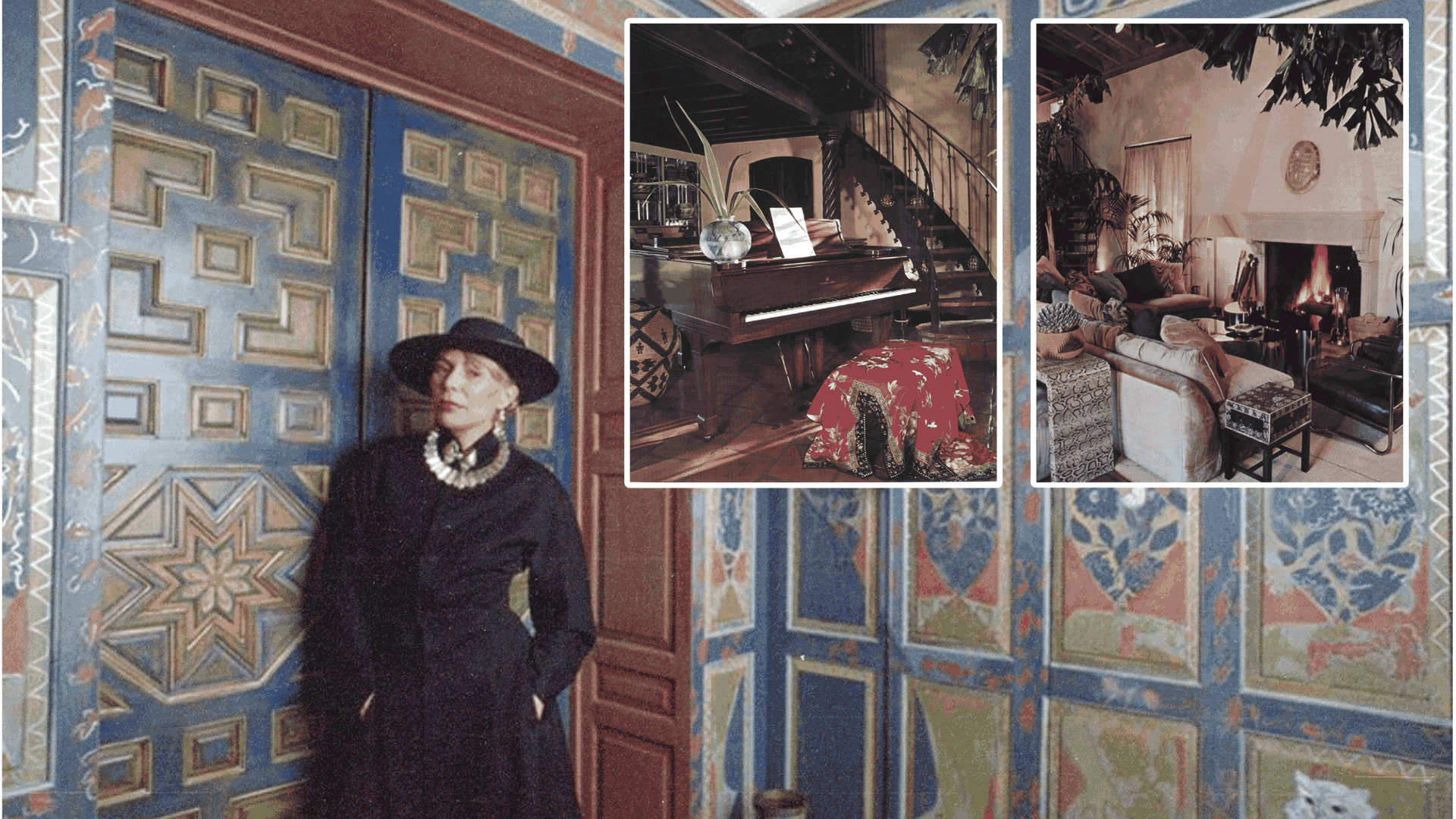
Mitchell’s property holdings are not flashy. They are, however, substantial.
Her primary residence is a Spanish-style estate in Bel Air, Los Angeles, which she purchased in 1974 for approximately $350,000.
The property was built in the 1920s and sits on a hilltop overlooking the Bel-Air Country Club. Six bedrooms. Over 6,000 square feet. Comparable properties in that neighborhood currently sell for $15 to $30 million.
She also owns a property in Laurel Canyon and a waterfront property in Sechelt, British Columbia, on Canada’s Sunshine Coast.
Real estate combined is estimated at $10–$20 million by Finance Monthly. Other sources put it closer to $25–$30 million, depending on the comparable sales used.
There is no yacht. No private jet. No mansion-hopping lifestyle. The properties are described by people who know her as creative sanctuaries rather than trophies.
Her original artwork and handwritten lyrics are held privately and not commercially marketed. They appreciate simply by existing.
Joni Mitchell’s Net Worth Through the Decades
Here is the estimated progression based on publicly available data:
|
Year |
Estimated Net Worth (Approx) |
Key Driver |
|
2000 |
~$50 million |
Royalties, Bel Air property appreciation |
|
2010 |
~$70 million |
Catalog value growth, archive interest |
|
2015 |
~$90 million |
Catalog reissues, streaming era begins |
|
2020 |
~$110 million |
Archives series launch, streaming growth |
|
2022 |
~$130 million |
Joni Jam, renewed public profile |
|
2024 |
~$145 million |
Grammy performance, biopic in development |
|
2026 |
~$150 million |
Sustained royalties, catalog appreciation |
These are estimates. Music catalog valuations are private, and actual figures may differ. The trajectory is clear: slow, compounding growth from passive income on assets she owned outright.
That is different from a pop star who sells 50 million albums and watches the money drain through bad deals.
Mitchell’s wealth grew while she was in a hospital. Mitchell’s wealth grew while she was in a hospital recovering from a brain aneurysm. The catalog does not stop working.
Where She Stands Among Her Generation
People search for this question, yet no competing posts answer it. Here is a direct comparison:
|
Artist |
Estimated Net Worth |
Catalog Status |
|
Joni Mitchell |
~$150 million |
Owns it, no sale |
|
Bob Dylan |
~$500 million |
Sold for ~$300 million in 2020 |
|
Neil Young |
~$200 million |
Sold 50% stake |
|
Carole King |
~$80 million |
Partial sale |
|
James Taylor |
~$80 million |
Retained most |
Mitchell’s net worth is lower than Dylan’s.
That is largely because Dylan took the lump sum when he sold his catalog, and it was enormous.
Mitchell’s annual royalty income of $650,000–$850,000 represents the ongoing yield of a catalog she still owns. If she sold at a multiple similar to Dylan’s, her net worth would look very different immediately.
Whether that trade-off is better or worse depends entirely on your time horizon and your preference for income over capital.
Mitchell has never seemed particularly interested in money as an end in itself. Holding the catalog appears to be the natural choice.
Conclusion
Joni Mitchell’s net worth did not come from being the most commercially successful artist of her generation.
It happened because she owned what she made and held it long enough for it to compound.
The catalog she built in the 1970s generates income from platforms that did not exist when she made it. Songs she wrote in an attic while hiding a pregnancy are licensed to films and TV shows every year.
A contract decision made before most of her current listeners were born still underpins her entire financial position.
That is a different lesson from the usual celebrity wealth story. There was no pivot, no brand extension, no strategic reinvention. Just ownership and patience.
Which of these income sources surprised you most? Leave a comment below.
Frequently Asked Questions
What is Joni Mitchell’s Most Financially Valuable Song?
“Both Sides Now” is likely her most valuable single composition. It has been recorded by more than 1,500 artists across six decades, generating publishing royalties on every cover.
Where Does Joni Mitchell Live?
Mitchell lives primarily in a Spanish-style estate in Bel Air, Los Angeles, which she has owned since 1974. She also maintains a waterfront property in Sechelt, British Columbia, Canada.
Has Joni Mitchell Sold Her Music Catalog?
No. Her 2021 deal with Reservoir Media was a publishing administration agreement, not a sale. She retained ownership of her catalog while Reservoir handles licensing and collection on her behalf.