

In today’s world, we are surrounded by vast amounts of data that influence our actions in both large and small ways. Whether businesses are planning growth or individuals are looking to improve personal habits, analytics plays a pivotal role in guiding those choices. Leveraging tools like an online master’s in data analytics can help develop the skills needed to interpret data and turn it into actionable insights. Data analytics is no longer just the domain of analysts and scientists; it is accessible to anyone willing to embrace a data-driven approach.
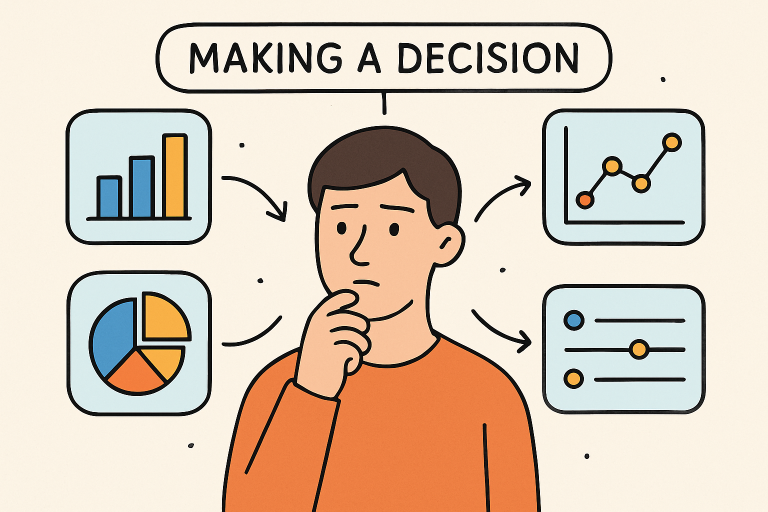
More than ever, we are witnessing a shift from intuition-based to evidence-based decision-making. People and organizations are seeking concrete information to back their strategies, leading to better outcomes and increased efficiency. As information becomes increasingly democratized, those who understand the value of analytics are better equipped to solve challenges and seize opportunities in both personal and professional arenas.
Understanding Data Analytics
At its core, data analytics is the discipline of systematically analyzing raw data to find patterns, correlations, and trends. The goal is to move beyond guesswork and make decisions rooted in factual analysis. As massive data sets become more readily available, the importance of understanding analytics grows. Individuals who harness this information can make more accurate, timely, and effective decisions.
Today, analytics spans multiple fields, including healthcare, finance, marketing, and education. Big data has amplified this scope, requiring new methods and tools to handle increasingly complex data sources. Analytics provides clarity in a world overflowing with information, allowing users to focus on what really matters.
Data Analytics in Business
Businesses across the globe are using data analytics not just for reporting, but as a strategic tool. Predictive analytics, for example, helps organizations anticipate market shifts, understand consumer preferences, and optimize marketing efforts. This approach allows companies to respond quickly to emerging trends and stay ahead of the competition, contributing to long-term sustainability and growth. Companies that prioritize data-driven decisions see measurable improvements in performance and customer satisfaction.
Operational efficiency is another key area where analytics has made its mark. By examining supply chain metrics or sales data, businesses can identify bottlenecks and streamline their workflows. This leads to reduced costs and enhanced service delivery, reinforcing the value of investing in data literacy across the organization.
Personal Decision-Making
Analytics is not restricted to corporate boardrooms. It is increasingly shaping the way we manage our daily lives. Fitness trackers, health monitoring devices, and mobile apps collect and analyze user data to make personalized recommendations. Whether it is tracking step counts or monitoring sleep patterns, individuals are more mindful of their health due to readily available, data-based feedback.
Financial decisions are also being revolutionized. Apps that automatically categorize spending, set budget limits, and provide alerts all depend on analytics to help users maintain better control over their finances. Consumers can now make well-informed decisions about purchasing, investing, and saving, contributing to overall well-being.
Tools and Technologies
The landscape of data analytics tools continues to expand. One of the most significant developments in recent years has been the emergence of self-service analytics platforms. These tools are designed for ease of use, offering intuitive dashboards and automated insights so that even those without technical backgrounds can generate reports and visualize data.
This democratization of analytics has far-reaching implications. Teams can be more agile, responding to data in real time rather than waiting for specialized analysts. In education, teachers analyzing student performance data can quickly adapt lesson plans, much as businesses respond to customer feedback. The future will likely see continued growth in the accessibility and functionality of these technologies, making data literacy a valuable skill for all professionals.
Challenges and Considerations
Despite its many advantages, there are important challenges to consider when adopting data analytics. Data privacy remains a top concern, especially as individuals increasingly trust apps and businesses with sensitive information. Regulations such as GDPR in Europe and similar laws elsewhere are attempting to address these concerns, but ongoing vigilance is necessary.
Another challenge is the need for data literacy. With so much information at our fingertips, distinguishing valuable insights from noise requires critical thinking and proper training. There is also the potential risk of information overload, where the sheer volume of data makes meaningful analysis difficult. It’s vital to use trusted sources and apply rigorous methodology to avoid flawed conclusions.
Future Trends
Looking ahead, advancements in artificial intelligence and machine learning are set to enhance the power of data analytics further. These technologies are beginning to automate complex analytical tasks, offering more accurate predictions and deeper personalization than ever before. Experts anticipate that AI-integrated analytics will revolutionize fields ranging from healthcare, where they can predict disease outbreaks, to retail, where hyper-personalized customer experiences will become common.
As developments continue, professionals with skills in both analytics and AI will be in high demand. Adapting to these future trends will be crucial for maintaining relevance in the evolving work landscape.
Conclusion
Data analytics has fundamentally transformed the way choices are made in everyday life. Both organizations and individuals who embrace data-driven strategies are poised to thrive in an increasingly complex world. By understanding and applying the principles of analytics, it becomes possible to navigate decision-making with greater confidence and achieve more impactful outcomes.