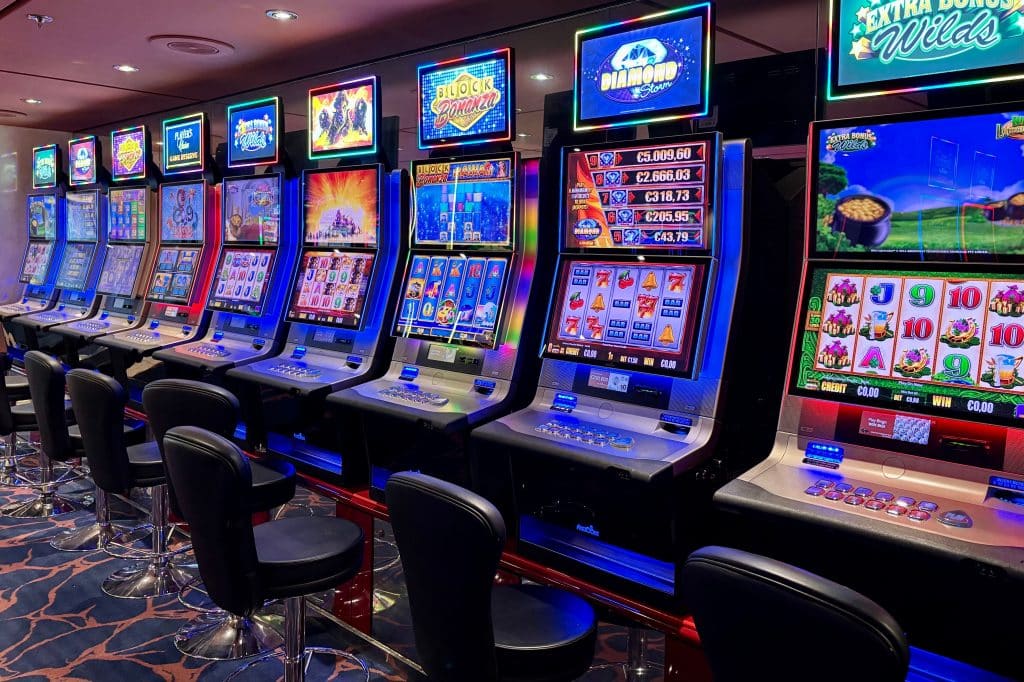
Slot machines have changed a lot since they first appeared more than a century ago. Early machines were simple devices with metal parts, real reels, and a lever on the side. Modern slots are very different, as Hellspin Casino. They use software, digital screens, animation, and sound.
Still, the basic idea behind a spin has stayed easy to understand. A player starts a spin and waits to see where the symbols land. The technology behind that simple action, however, has gone through several major changes.
The First Mechanical Slot Machines
The history of slots dates back to the end of the 19th century. Mechanical slots were completely mechanical at that point. In a cabinet were gears, springs, and mechanical reels.
One such slot machine was the Liberty Bell designed by Charles Fey in San Francisco. It had three reels with some simple symbols like horseshoes, a liberty bell, and poker cards.
To play, one had to pull a lever that started the reels rotating. After some time, they stopped, and depending on the position of the symbols, you either won or lost.
There were no screens or digital effects. Everything depended on the physical parts inside the machine.
Why the Lever Became So Famous
The lever became one of the best-known features of early slots. Pulling it was part of the experience. Players could see the reels moving and hear the mechanical sounds.
This design was so closely linked to slots that the machines became known as “one-armed bandits.” The name came from the single lever on the side and the fact that players could lose money on them.
Mechanical slots were simple, but they had limits. The number of reels and symbols had to fit inside a physical machine. This restricted the number of possible combinations.
The Move to Electromechanical Machines
Slot technology started to change during the 20th century. Manufacturers began adding electrical parts to mechanical designs.
These machines still had physical reels, but electricity could control some actions. Lights and sounds also became more common. The machines felt more active and colorful than older models.
One important change was the introduction of buttons. Players no longer always needed to pull a large lever to start a spin. A button could perform the same task.
This may sound like a small change, but it was an important step toward modern slot design.
Video Slots Changed the Screen
The next major change came with video technology. Physical reels were no longer necessary. Instead, a screen could show virtual reels and symbols.
This gave game designers much more freedom. They could create more paylines, unusual reel layouts, animated symbols, and bonus features. A game was no longer limited by the space inside a mechanical cabinet.
Video slots also changed how a spin looked. Instead of real reels turning inside a machine, software created the visual effect of spinning reels on a screen.
The familiar reel design remained because players already understood it.
Random Number Generators Take Control
Modern slot games usually depend on a random number generator, often called an RNG. It is software that continuously produces number sequences.
When a spin starts, the system uses a number to determine its result. The symbols shown on the screen represent that result.
This means the animation itself does not decide where the reels stop. It is mainly a visual way to present the outcome.
A previous spin also does not tell you what the next spin will be. Each result is generated separately. A long series of one type of result does not guarantee that a different result will come next.
Slots Move Online
The rise of the internet brought another major change. Slot games no longer needed a physical casino cabinet. They could run on computers and later on phones and tablets.
Digital technology allowed developers to add detailed graphics, music, themes, bonus rounds, and interactive features. Some games kept the classic three-reel look, while others moved far beyond it.
The word “spin” remained, even though nothing physical was spinning anymore. Today, pressing a button or tapping a screen can start the whole process.
The Spin Is Still the Center of the Game
Slot machines have moved from gears and metal reels to screens and software. Their appearance has changed, and the technology behind them is far more complex.
Yet the spin has remained at the center of the design. What once began with a heavy mechanical lever can now happen with a single tap.
That makes the history of slots an interesting example of how technology can completely change a machine while keeping its original idea easy to recognize.