
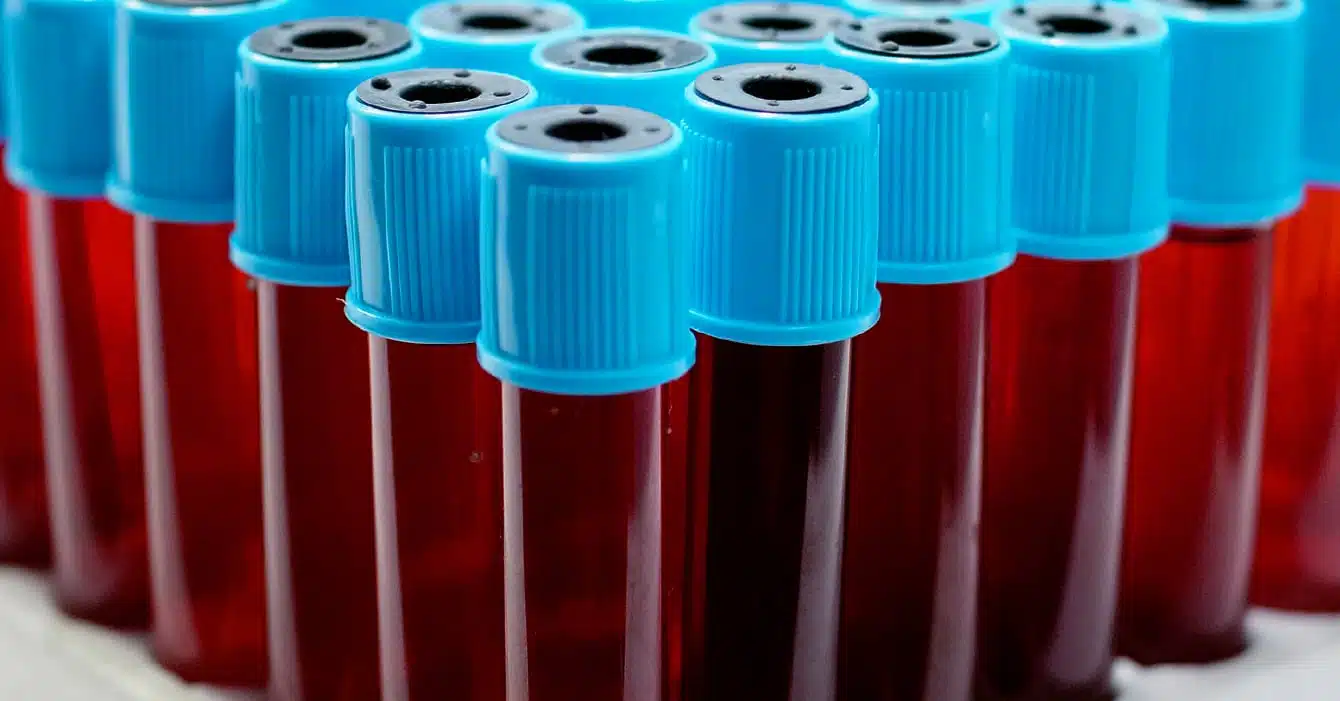
Stopping sample loss requires four simple upgrades: utilizing fitted protective storage, implementing dual-format labeling systems, enforcing documented transport controls, and standardizing preparation workflows.
These foundational sample handling best practices directly target the most predictable analytical failure points.
By upgrading from ad hoc containers to verifiable documentation, analytical laboratories can significantly reduce reruns and protect data integrity.
Consider the all-too-common disruptions that derail an analytical batch. It might be a cracked vial discovered after a field run where the seal is compromised.
Perhaps two unlabeled tubes are pulled from cold storage, forcing hours of prior collection work into a compromised judgment call.
Or an analyst opens a jostled transfer tray mid-shipment only to find tubes shifted entirely out of their slots.
These are not random failures. They are highly predictable events that occur at known vulnerability points in the sample journey.
Addressing these vulnerabilities requires standardized protocols that reduce variability and prevent contamination from the start.
Adopting a reliable, pre-structured preparation approach, such as Restek’s standardized quechers extraction method, provides a robust defense against these errors.
1. Fitted Protective Storage to Prevent Breakage
The most immediate and visible failure mode in sample handling is physical impact during transport.
Studies show that preanalytical issues account for 9.3% of total sample errors.
When glass vials make direct contact with one another inside generic foam, the risk of breakage rises exponentially.
More insidious than shattered glass is the risk of invisible stress fractures that compromise container integrity.
Escalating your physical protection requires recognizing that benchtop racks and transport systems serve completely different purposes.
A benchtop rack is designed primarily for static stability inside the laboratory.
Transport demands a much higher standard where each container is individually cradled, immobilized, and shielded against impacts.
Upgrading to transport-grade storage means replacing loose coolers with purpose-built compartment cases.
Operationally, the features that matter most are a snug cavity fit, closed-cell foam materials, and rigid compartment walls.
For laboratories running repeated field deployments, standardizing on versatile custom wholesale cases from Royal Case Company is a logical procurement decision.
Moving to purpose-built systems establishes a fleet-wide infrastructure standard that ensures every team member packs safely.
Conducting an immediate audit of your frequently transported containers is the best starting point for this upgrade.
The return on investment is simple to calculate when evaluating these protective strategies.
Preventing just one catastrophic breakage event typically offsets the entire cost of transitioning to fitted storage.
2. Labeling Systems That Prevent Mix-Ups
While physical breakage is immediate and obvious, misidentification is the silent failure mode.
It travels completely undetected through the analytical workflow and frequently only surfaces at the final reporting stage.
Transposed tubes, smeared labels, and separated containers are common culprits that derail an entire analysis.
To contextualize this risk, patient identification errors involving released results can hit 55 errors per 1,000,000 billable tests.
Misidentification is particularly dangerous because it produces no visible signal during the initial handling phase.
The sample arrives, undergoes processing, and generates data that may appear internally consistent.
However, if the result is assigned to the wrong matrix or time point, the analytical effort is invalidated.
Mitigating this requires a systemic upgrade to identification and containment. Dual-format labeling ensures every container can be verified digitally at intake and at the extraction bench.
To safeguard against tray transposition, slot-matched identification should be implemented across all transport protocols.
Assigning each compartment a corresponding alphanumeric identifier allows a displaced tube to be traced back directly.
Further refinements include color-coded sub-containers, which are particularly valuable for multi-matrix batches.
Transport trays should feature secure latching lids paired with transparent covers for quick visual inspections.
Integrating secondary containment with absorbent liners provides a critical contamination prevention layer.
These design choices serve as the first physical line of traceability in a defensible chain of custody system.
|
Key Insight: Silent misidentification produces no visible error signal, yet a single swapped tube can invalidate an entire analytical batch. |
|---|
3. Transport Temperature and Contamination Control
Physical integrity and proper identification are essential, but they cannot guarantee sample viability alone.
A sample can arrive physically unbroken yet be analytically compromised by an unlogged temperature excursion.
Government reviews indicate that overall sample error rates generally hover around 1 percent, driven largely by handling deviations.
These invisible failures alter analyte stability and introduce unpredictable matrix interference into the final results.
Generic insulation provides basic thermal buffering but delivers zero verifiable documentation.
In regulated testing environments, defensible data requires documented proof of temperature compliance throughout the entire custody chain.
The required temperature control upgrade involves pairing insulated transport cases with validated phase-change ice packs.
This must be coupled with reusable data loggers that generate exportable digital records.
Contamination control during transit requires an equal level of operational rigor. Individual sample bags or secondary seals should be applied to every container before it enters the transport case.
Furthermore, strict physical separation between known high-concentration and low-concentration samples is critical for multi-matrix batches.
Barrier packaging should always be the final step before sealing the case to prevent cross-contamination.
To evaluate your current lab sample transport protocols, apply a quick two-question diagnostic.
Can you easily produce a continuous, time-stamped temperature record for your last ten shipments?
Do your transport records explicitly document physical separation between different sample types? If the answer is no, upgrading your controls is an urgent compliance necessity.
|
Important: If you cannot produce a continuous, time-stamped temperature log for your last ten shipments, your analytical data is at immediate compliance risk. |
|---|
4. Standardizing Prep Workflows for Repeatability
The sample handling system extends directly into the extraction and preparation stage.
Operator variability and incorrect consumable selection are major failure points that live entirely inside the laboratory.
The wrong buffer salt pulled from a shared shelf or a poorly timed centrifuge spin compound rapidly across batches.
Sample preparation workflow design requires reducing variability and building physical traceability.
Upgrading to method-specific sample handling kits turns the standard operating procedure into a physical object.
Pre-packaging every consumable required for a given protocol eliminates the selection step and reduces substitution errors.
This establishes a natural unit of workflow accountability across the entire laboratory team.
A perfect real-world proof of concept for this standardization philosophy is the QuEChERS method.
Originally developed for pesticide residue analysis, it pre-structures the extraction sequence into a highly reproducible protocol.
Utilizing pre-assembled extraction salts and dispersive SPE sorbents protects batch-to-batch consistency.
This approach significantly reduces cognitive load during one of the workflow’s most error-prone phases.
To reinforce this kit-based approach, environmental consistency tools should be locked into place.
Dedicated calibrated pipettes, lab timers, and mini-centrifuges should be strictly assigned per prep station.
Paired with internal standard operating procedures, these kits ensure that extraction repeatability becomes a built-in feature.
Sample Handling Kit Checklist
Use this functional checklist to audit and assemble a standardized sample handling and transport kit within your facility.
- Fitted protective case with precision-cut foam inserts matched to container dimensions
- Barcode or QR labels pre-printed for all containers and corresponding compartment slots
- Absorbent secondary containment liner per compartment for liquid samples
- Validated temperature logger positioned at the thermal center of the transport case
- Secure latching lid and transparent cover for visual inspection without exposure
- Pre-assembled extraction kit containing tubes and salts pre-measured for the target method
- Dedicated calibrated pipettes, certified tips, and a lab timer per prep station
- Laminated method-specific step-by-step extraction checklist inside the kit
- Chain of custody documentation in a weatherproof sleeve attached to the transport case
The Bottom Line
Sample handling is the absolute foundation upon which all reliable analytical results are built.
A reported result is only as defensible as the physical and documentation systems that protected the sample.
Take a moment to audit your laboratory’s most recent incident reports or quality control flags.
Map each event to physical damage, misidentification, temperature excursions, or preparation variability to pinpoint weaknesses.
Upgrading to fitted storage, implementing smarter labeling, and deploying validated temperature monitoring are not massive capital commitments.
They are targeted, low-barrier workflow interventions that pay back rapidly through fewer reruns.
The laboratories that consistently produce unassailable data do not just rely on sophisticated benchtop instruments.
They succeed because they engineer exceptional lab organization into every single step of the sample journey.