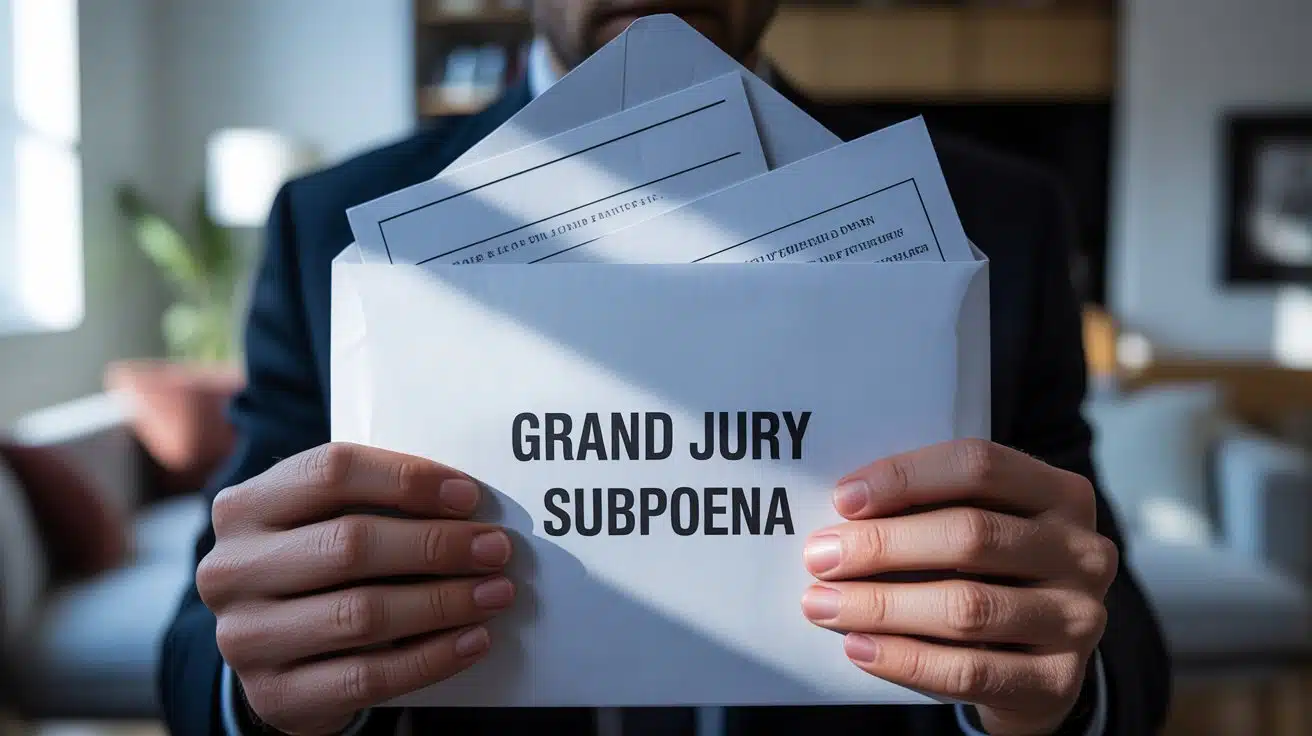
You open an envelope and find a legal document labeled “grand jury subpoena.”
It’s natural to feel concerned or uncertain. You may wonder what it means, whether you are in trouble, or what steps you should take next.
The most important point to understand first is that receiving a grand jury subpoena does not mean you are being charged with a crime.
In many situations, it simply means the legal system is seeking information that you may have.
This blog explains what a grand jury subpoena is, why it may have been issued to you, your rights, and the steps you should take moving forward.
What is a Grand Jury Subpoena?

A grand jury subpoena is a formal legal order. It requires you to do one of two things: appear before a grand jury to give testimony, or produce documents and records that may be relevant to an investigation.
The authority behind it comes from the grand jury itself, which operates under the supervision of a court.
Federal grand jury subpoenas are issued under the Federal Rules of Criminal Procedure.
State grand juries operate under their own state laws, but the basic structure is similar.
Here is the key point: a subpoena is not a charge. No one is accusing you of a crime by sending you this document.
A grand jury investigation is still in its early stages. The jury is gathering facts. You may simply be someone who needs information.
Think of it as a formal request backed by legal force. You are required to respond. But receiving one does not, by itself, put you in legal jeopardy.
Why You Might Receive a Grand Jury Subpoena
Not everyone who receives a subpoena is in the same position. The law recognizes three distinct categories:
- Witness: You have information or documents relevant to the investigation. You are not a suspect. Most subpoena recipients fall into this category.
- Subject: Your conduct is within the scope of the investigation. You are not yet a target, but your actions are under review.
- Target: There is substantial evidence linking you to the alleged crime. This is the most serious category.
Common scenarios where people receive subpoenas:
- You worked at a company under investigation for financial misconduct
- You witnessed an event connected to a federal case
- You have bank records, emails, or contracts that prosecutors need
- You are a healthcare provider, accountant, or attorney whose records are relevant
In the vast majority of cases, people receive subpoenas as witnesses.
They have records or knowledge that helps investigators build a picture of what happened. They are not in legal danger themselves.
Still, the category you fall into matters enormously. If you are unsure, that is the first reason to speak with an attorney.
Types of Grand Jury Subpoenas
There are two main types of grand jury subpoenas. Knowing which one you received determines what you are required to do next.

1. Subpoena to Testify
A subpoena to testify requires you to appear before a grand jury and answer questions under oath about matters related to an investigation.
You may be asked about events, communications, or individuals connected to the case.
Receiving this subpoena does not automatically mean you are a suspect. Many witnesses are called simply to provide information.
Because testimony is given under oath, false statements can carry serious legal consequences.
2. Subpoena for Documents
A subpoena for documents requires you to provide specific records, such as emails, contracts, financial statements, or other files relevant to the investigation.
The subpoena will outline what must be produced and the deadline for compliance.
Once received, you must preserve the documents exactly as they exist. Altering, deleting, or destroying records can lead to additional legal penalties.
When both apply:
In some cases, you may receive a subpoena that requires both your testimony and the production of documents.
This is more common in complex investigations involving financial crimes or corporate misconduct.
Read your subpoena carefully to identify which type it is. The document will specify exactly what is being asked of you and by what date.
What to Do Immediately After Receiving One
Do not panic, but act quickly. Here is what to do right away:
1. Read Carefully: Note the deadline, the court that issued it, and exactly what is being requested. Missing a deadline can have serious legal consequences.2. Do Not Ignore it: A grand jury subpoena is not optional. It is a court order. Setting it aside or hoping it goes away are among the worst things you can do. More on this under consequences.3. Preserve Everything: Do not delete emails, move files, shred documents, or alter any records that could be related to the investigation. Even if you think the documents are unrelated, preserve them. Destroying materials after receiving a subpoena can result in serious legal trouble, separate from whatever the original investigation is about.4. Get Legal Advice: This is the most important step. Contact a criminal defense attorney or one who handles federal investigations. Many offer free initial consultations. Even if you are simply a witness, having legal guidance before you say anything protects you significantly.
What Happens During Grand Jury Testimony
If your subpoena requires testimony, here is what the experience looks like.
The grand jury room is not a typical courtroom. It is smaller and more private.
A group of 16 to 23 jurors sits in the room along with a court reporter who records everything.
Who is present:
- The prosecutor (a government attorney)
- The grand jurors
- A court reporter
- You, the witness
Who is not present:
- No judge
- No defense attorney
- The person being investigated is not in the room
The prosecutor asks questions. The jurors may also ask questions in many jurisdictions. You answer under oath, meaning you are legally required to tell the truth.
One important note: your attorney is generally not allowed inside the room during your testimony.
However, you have the right to step outside and consult your attorney at any point before answering a question. Use that right if you need it.
Everything that happens in the grand jury room is confidential by law.
Your Rights When Responding to a Subpoena
Receiving a subpoena does not strip you of your legal rights. Here are the key protections you have:
1. Right Against Self-Incrimination
Under the Fifth Amendment, you cannot be forced to say anything that could be used against you in a criminal case.
If answering a question could incriminate you, you may invoke this right. This is often called “pleading the Fifth.”
2. Right to Consult an Attorney
You have the right to hire and consult an attorney before and during the process.
Your attorney cannot sit with you in the room, but you can step out and consult them between questions.
3. Right to Challenge Unreasonable Requests
If the scope of a document subpoena is too broad, your attorney can file a motion to limit or quash it.
Courts do not always grant these, but it is a legal option worth exploring.
4. Privilege Protections
Certain communications are legally protected.
These include conversations with your attorney (attorney-client privilege), communications between spouses, and, in some cases, doctor-patient or clergy communications.
If a subpoena asks you to produce information covered by privilege, raise that with your attorney immediately.
Consequences of Ignoring a Grand Jury Subpoena
A grand jury subpoena is a court order. Failing to comply puts you in contempt of court. The consequences include:
- Significant fines
- Arrest
- Jail time until you agree to comply (called civil contempt)
- Criminal contempt charges in serious cases
Courts take non-compliance seriously.
Unlike a jury duty summons, where a postponement is relatively easy to arrange, ignoring a subpoena has immediate legal consequences.
If you have a legitimate reason you cannot comply by the deadline, contact an attorney immediately and address it through proper legal channels.
Grand Jury Subpoena vs Court Subpoena
These two types of subpoenas are often confused. They serve different purposes.
| Feature | Grand Jury Subpoena | Court (Trial) Subpoena |
|---|---|---|
| Stage of Process | Pre-trial investigation | During an active trial |
| Who issues it | Grand jury, through the prosecutor | Judge or attorney in a trial |
| Proceedings | Secret and confidential | Public court record |
| Purpose | Gather evidence to decide on charges | Present evidence or testimony at trial |
| Scope | Often broader, covering a wider investigation | Focused on specific issues in the case |
| Flexibility | Less room for negotiation | More procedural options to respond |
The core difference is timing and transparency. Grand jury proceedings are secret.
Trial proceedings are public. If you receive a grand jury subpoena, confidentiality rules apply to you as well.
Common Mistakes to Avoid
People make these errors more often than you might think. Each one can make a difficult situation significantly worse.
1. Ignoring the Subpoena
Already covered, but worth repeating. There is no safe way to simply not respond. Act promptly.
2. Talking without Legal Awareness
Many people think that if they have nothing to hide, they can just answer every question freely.
This is risky. Even innocent statements can be taken out of context or used in ways you did not intend. Get legal guidance first.
3. Destroying or Altering Documents
Once you receive a subpoena, you have a legal duty to preserve relevant materials.
Deleting files, shredding papers, or altering records after receipt is called obstruction of justice.
It is a federal crime. It does not matter if the documents would have helped or hurt your position.
4. Discussing the Case Publicly
Do not post on social media. Do not tell coworkers the details. Do not vent about it at dinner.
Grand jury proceedings are confidential by law. Sharing information about the subpoena or the investigation can expose you to legal liability.
5. Assuming You Don’t Need a Lawyer as a Witness
Witnesses can become subjects. Subjects can become targets. The investigation moves, and your status can shift without warning.
Having an attorney from the beginning costs far less than trying to manage a complicated situation after the fact.
Conclusion
A grand jury subpoena is a serious document. But it is manageable when you respond the right way.
Read it. Preserve your records. Get an attorney. That is the short version.
The process is structured, and your rights are protected at every step.
How you respond in the first few days makes all the difference. Take it seriously, get informed, and do not face it alone.
Frequently Asked Questions
Can Deleted Texts Be Subpoenaed?
Yes. Deleted texts can sometimes be recovered from devices, backups, or service providers. A subpoena can require access if the data still exists or is retrievable.
What Type of Crimes Go to A Grand Jury?
Grand juries typically review serious criminal cases, especially felonies. These include violent crimes, drug offenses, fraud, and other major violations requiring formal charges.
What Not to Tell a Judge?
Do not lie, guess, argue unnecessarily, or share irrelevant details. Always be truthful, concise, and respectful. False statements can result in perjury charges.