

Significant weight loss is one of the most important health achievements a person can experience and whether it is achieved through lifestyle changes and bariatric surgery or GLP-1 medications such as Ozempic, the physical transformation is often life changing.
But for many patients, a new concern appears once the weight is lost and that is loose or sagging skin.
In 2026, dermatologists are seeing a clear increase in patients seeking treatment for skin laxity after weight loss, especially among users of Ozempic and while the health benefits of weight reduction are undeniable, the skin does not always tighten at the same rate as the body changes underneath it.
This has created demand for medically grounded and non surgical solutions that address skin quality at a structural level rather than surface level.
Why Loose Skin Happens After Weight Loss
Skin is a living organ made up of collagen and elastin proteins that provide firmness and elasticity and structure and when the body gains weight over time the skin stretches to accommodate the increased volume.
However, when weight loss occurs rapidly or significantly, especially in cases involving medications like Ozempic or other GLP-1 therapies, the skin may not fully retract.
Several factors influence this:
- Speed of weight loss (rapid loss gives skin less time to adapt)
- Age related collagen decline
- Genetics and skin quality
- Duration of skin stretching before weight loss
As a result, patients may experience:
- Loose skin on the abdomen
- Sagging upper arms (“bat wings”)
- Laxity in the thighs and knees
- Stretch marks and texture changes
- Facial volume loss and jawline softening
These changes are not harmful medically but they can significantly impact self confidence and body image after transformation.
Why Creams, Exercise and Diet Are Not Enough
A common misconception is that topical creams supplements or strength training alone can fully resolve loose skin.
While these approaches can support overall skin health, they do have clear limitations:
- Topical creams cannot reach deep dermal layers where structural collagen resides
- Exercise builds muscle but does not tighten excess skin
- Nutrition supports repair but cannot reverse stretched connective tissue
Once collagen fibers have been significantly stretched external methods alone are often not enough to fully restore firmness.
This is why dermatologists increasingly recommend clinical treatments that directly stimulate collagen remodeling beneath the skin’s surface.
The Clinical Approach: Ultrasound Skin Tightening
One of the most widely recommended non-invasive treatments for post weight loss skin laxity is ultrasound based skin tightening. Sofwave is an FDA-cleared system used by dermatologists and aesthetic clinicians to deliver this technology non-invasively.
This technology works by delivering focused energy into targeted layers of the skin and creating controlled thermal stimulation and this process activates the body’s natural collagen production response and gradually improves skin firmness over time.
You can learn more about FDA cleared ultrasound skin tightening and how it works at a clinical level.
Unlike surgical procedures ultrasound does not remove skin or require incisions and instead it works by strengthening the skin’s underlying structure which makes it especially suitable for patients with moderate laxity after weight loss.
The Ozempic and GLP-1 Skin Effect
One of the most significant trends in aesthetic dermatology in recent years is the rise of patients using GLP-1 medications such as Ozempic Wegovy and similar treatments.
While these medications are highly effective for weight loss and metabolic health, many patients experience what is now commonly referred to as “Ozempic skin”.
This includes:
- Facial volume loss leading to a hollow or tired appearance
- Increased skin laxity in the lower face and neck
- Loose abdominal skin after rapid fat reduction
To address this, dermatologists are increasingly including skin focused treatments as part of post weight loss care plans.
Dedicated protocols such as skin tightening after weight loss are now being used to specifically target these concerns in GLP-1 patients.
Where Loose Skin Appears Most After Weight Loss
Post-weight-loss skin laxity is not limited to one area of the body. It often affects multiple regions simultaneously, including:
Abdomen
One of the most common areas affected due to significant fat storage and expansion.
Upper Arms
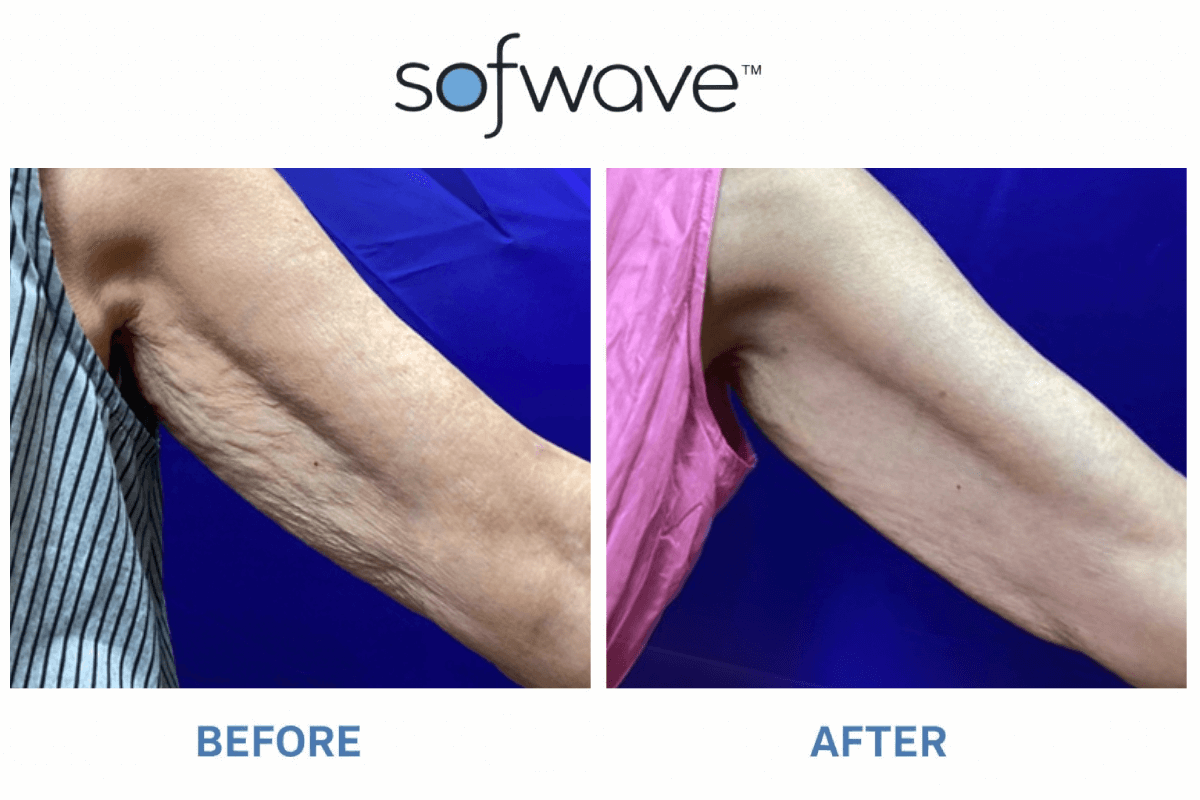
Loose skin in this area can persist even with strength training.
Thighs
Skin laxity and stretch marks are common after major weight reduction.
Face and Neck
Loss of facial fat can lead to sagging around the jawline and neck area.
Ultrasound based treatments can be applied across these regions to improve overall skin firmness and contour.
What Clinical Results Show
Clinical studies and real world dermatology practice have shown improvements in skin texture, firmness and elasticity after Sofwave treatments.
Patients often notice gradual tightening over several weeks as new collagen forms beneath the skin.
You can review documented clinical results for skin firming to see how outcomes typically progress over time.
Unlike surgical approaches, improvements are subtle and natural aligning with the goal of restoring not altering the body’s appearance after weight loss.
A Dermatologist Led Treatment Strategy
In 2026 dermatologists emphasize a layered approach to post weight loss skin concerns.
Rather than relying on a single solution treatment plans may include:
- Ultrasound based collagen stimulation
- Skin quality optimization procedures
- Long term maintenance strategies
The goal is not just tightening but restoring skin integrity in a way that looks natural and sustainable.
Because every patient’s skin response is different and consultation with a qualified professional is essential before beginning treatment.
Who Is an Ideal Candidate?
Ultrasound skin tightening is typically recommended for patients who:
- Have mild to moderate skin laxity after weight loss
- Prefer non surgical treatment options
- Want gradual and natural looking improvement
- Are in post GLP-1 or post-bariatric maintenance phase
It is not a replacement for surgical body contouring in severe cases but it is increasingly used as a first line option for early to moderate laxity.
Final Thoughts: A Medical Solution for a Modern Weight Loss Era
Weight loss through medications like Ozempic and other GLP-1 therapies has significantly improved metabolic health for millions of patients but it has also introduced a new dermatological challenge which is loose skin.
In response modern dermatology is shifting toward treatments that work with the body’s natural biology rather than against it.
Ultrasound based technologies offer a non-invasive clinically supported way to improve skin firmness by stimulating natural collagen production from within.
For many patients, this represents a practical bridge between health transformation and aesthetic recovery.
Take the Next Step
If someone is experiencing loose skin after weight loss, the most effective first step is to speak with a certified provider for a professional evaluation.
A qualified dermatologist can evaluate your skin condition and suggest a personalized treatment plan tailored to your goals and weight loss journey.