
Dog attacks, car crashes, falls on someone’s property — all situations where the injured party walks away thinking it’ll sort itself out. It rarely does. What actually determines the outcome isn’t the severity of the incident. It’s the paper trail. This guide covers how to report an incident the right way, in the right order, before the window closes.
Why a Report Filed Late Is Worth Less Than One Filed Today
Here’s the usual sequence. Something happens. Someone says it’s not a big deal. No report gets filed.
Then the injury turns out to need treatment. The other party changes their story. An insurer asks for documentation that doesn’t exist.
A formal incident report does one thing above everything else: it creates a fixed record of events as they happened, at the moment they happened. That timestamp matters in court. It matters to adjusters. It matters to anyone who wasn’t there and needs to decide who to believe.
Animal attacks are a good example of a situation where people consistently underestimate the legal dimension — they treat the bite as a medical issue and nothing more. Steps for protecting your interests after this kind of incident, including documentation requirements, are outlined at https://desertinjurylaw.com/practice-areas/dog-bite-lawyer-palm-springs-ca/, which handles cases where documentation gaps became the central problem. Those gaps are almost always avoidable.
File the report the same day.
What Actually Needs to Be Reported
The threshold is lower than most people assume.
Physical injury? Report it. Property damage over a few hundred dollars? Report it. Any third party involved? Report it. Not sure? Still report it. Removing something from the official record later is far easier than trying to add it.
Incidents that go unreported most often — and become significant later:
- Dog bites and animal attacks
- Slip-and-fall accidents on commercial or municipal property
- Minor vehicle collisions where both drivers agree to skip insurance
- Workplace injuries described as minor
- Assaults reported to HR but never escalated to law enforcement
That last one deserves attention. An internal HR report and a police report are not interchangeable. Filing one does not mean the other exists.
The First 24 Hours
Memory fades. Physical evidence disappears faster. Speed matters here not because the law demands it in every case, but for practical reasons.
Step 1. Photograph everything.
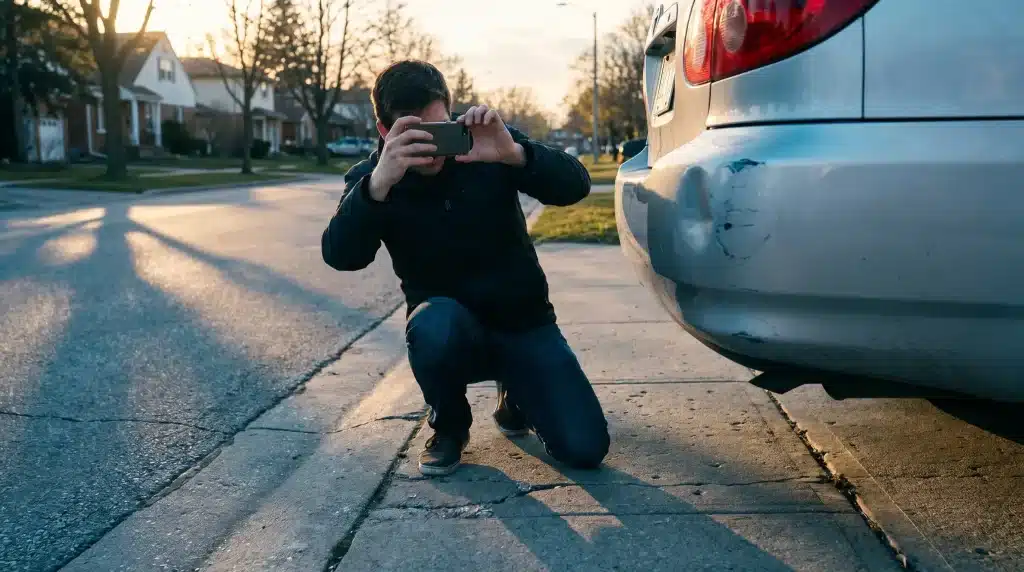
Both vehicles after a collision. The injury site after an animal attack. The hazard that caused a fall. Enable timestamps. Email the photos to yourself immediately — this creates a date-stamped backup outside your phone.
Step 2. Get contact information.
Names, phone numbers, addresses where available. Plate numbers. Business names if the incident happened on commercial property. Witness names. Once people leave the scene, they’re usually gone for good.
Step 3. Notify the right authority.
Traffic incident: call police even for minor collisions. Many insurers require a police report, and it is not the same document as a call to your insurance company.
Workplace incident: notify your supervisor in writing. Text works. Email is better. Something with a timestamp.
Public property: contact the relevant municipal department — parks, city maintenance, transit authority.
Animal attack: report to animal control and, where injuries are present, to law enforcement. Some jurisdictions legally require it.
Step 4. Get medical attention that day.
Even if nothing hurts yet. Adrenaline masks pain. Soft tissue injuries take time to surface. A medical record dated the day of the incident is worth significantly more than one created a week later when symptoms worsen.
Filling Out the Form
Different agencies use different forms. Same core questions every time.
- Date, time, location. Be precise. “Around noon” is less useful than “approximately 12:15 PM.” “Near the entrance” is less useful than “on the sidewalk adjacent to the north entrance of the parking structure.”
- What happened. Plain language. Chronological order. No fault assignment, no legal conclusions — just the sequence of events. A common mistake is trying to argue the case inside the incident report. That’s not what the form is for. Facts only.
- Injuries and damages. List everything, even what seems minor. If the full extent isn’t known yet — which is normal — write that. “Extent of injuries to be determined pending medical evaluation” is a legitimate entry.
- Witness information. Names and contact details for anyone who saw it happen.
- Sign and date it. An unsigned report is often treated as incomplete.
After Filing
The report is submitted. Now what?
An investigation may open, depending on the type of incident. Keep all communication in writing. Insurance companies will request the report — provide it through appropriate channels, and consult an attorney before releasing documents if there’s any uncertainty.
Medical records will eventually need to line up with the incident timeline. Defense attorneys look for gaps. Inconsistencies between the report and later medical records are one of the most common ways valid claims get undermined.
Mistakes That Cost People Their Claims
A few patterns repeat across cases that should have succeeded.
- Waiting. A report filed two weeks after the incident carries far less credibility than one filed the same day. Two days is not ideal. Two weeks is a real problem.
- Writing “no injuries.” People do this honestly — they feel fine in the moment. Then symptoms develop. “No injuries” on a day-one report is very difficult to walk back later.
- Accepting informal agreements. A verbal apology, a handshake, cash on the spot — none of these create a legal record. They also don’t necessarily close the case.
- Inconsistent accounts. One version to the officer, a slightly different one to the employer, another to the doctor. Even unintentional variations surface during proceedings. Keep the account factual, consistent, and simple.
On Legal Guidance
Nothing in this article is legal advice. Reporting procedures vary by jurisdiction and by incident type. If an incident resulted in injury or any situation with legal or financial consequences, consulting an attorney before taking further steps is the sensible move. Many personal injury attorneys offer free initial consultations and can clarify exactly what documentation is needed.
That consultation costs nothing. Filing the wrong report — or no report — can cost considerably more.
The Short Version
The report filed today is the record an attorney, insurer, or judge will refer to months from now. Same day. Specific details. No minimizing. Keep copies.
Everything else follows from there.
The information in this article is for general informational purposes only and does not constitute legal, financial, or professional advice. Consult a qualified attorney regarding your specific situation.