
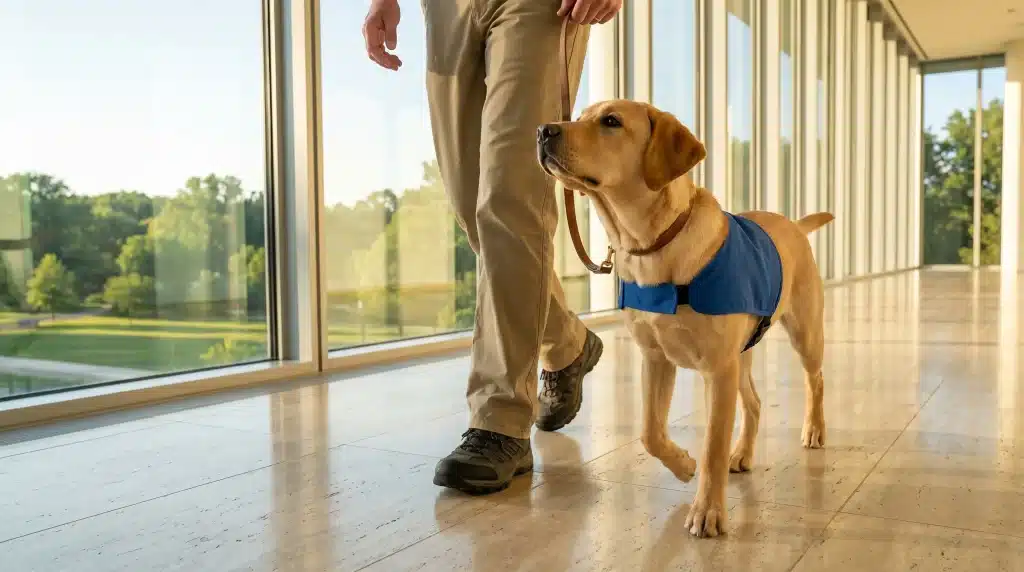
Raising or training a service dog comes with a lot of questions, especially about where the dog can legally go during training. Can you bring them into a grocery store? A restaurant? A hotel?
The answer isn’t as simple as a yes or no. A lot of people assume the same federal rules apply everywhere, but that’s not how it works. The legal status of a service dog in training (SdiT) actually depends on which state you’re in.
Let’s discuss why that’s so and what you need to know about service dog in training laws by state.
Service Dog in Training Laws by State: The ADA Doesn’t Cover Dogs in Training
The Americans with Disabilities Act (ADA) doesn’t apply to service dogs in training. Under federal law, only a fully trained service dog that helps a person with a disability is protected.
If you’re in the middle of training your dog, you can’t rely on the ADA to get you into public spaces. The state where you live gets to make its own rules.
Most States Do Protect SDiTs, but Not All
Almost every U.S. state covers SDiTs in some form. Previously, four states (Hawaii, Michigan, Washington, and Wyoming) didn’t extend public access rights to service dogs in training. Now, Hawaii is the only state where only fully trained service animals have full public access rights.
Wyoming updated its laws in March 2025 to include dogs under training to perform tasks for individuals with disabilities under its definition of “service animal.”
Michigan, on the other hand, has covered SDiTs since 2022. It now requires public accommodations to modify their policies to allow animal raisers and trainers to bring SDiTs into public spaces for training or socialization.
Washington also protects SDiTs now and prohibits places of public accommodation from denying a service animal trainer the right to bring an SDiT into any area open to the public.
That said, if you’re raising ortraining your own service dog, you should check the specific rules in your state before taking them anywhere. Some states have strict rules about where service dogs in training can go and who can handle them.
Identification Requirements Vary by State
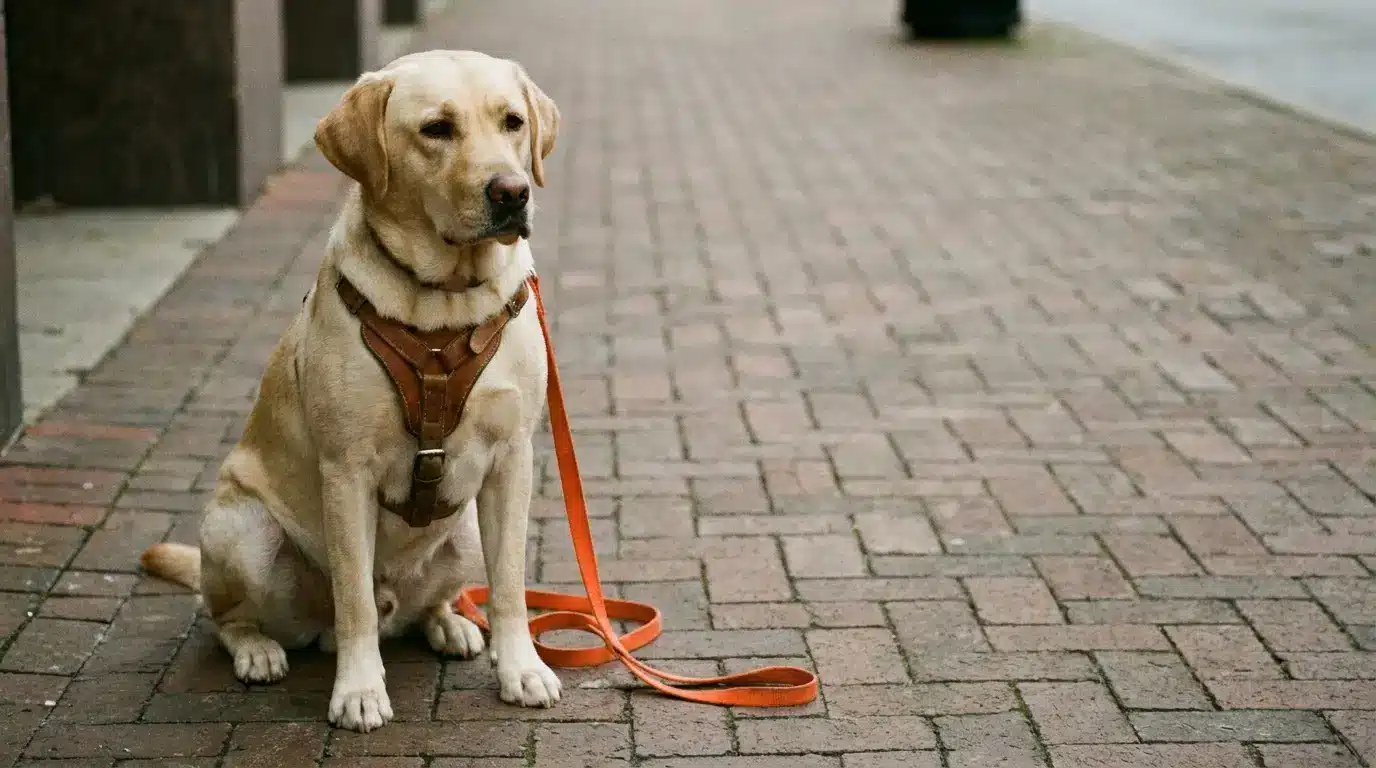
Some states that allow SDiTs specify exactly how the dog has to be identified in public. For example, SDiTs in North Carolina and South Dakota have to wear a collar and leash, a harness, or a cape that shows they are service animals in training.
Alabama also says SDiTs must wear a collar, harness, leash, cape, or backpack with written identification that can be clearly seen and read from at least 20 feet away. Montana has the same 20-foot visibility rule.
Idaho, on the other hand, not only requires the dog to be visually identified as a dog in training, but also makes it mandatory for the handler to carry and show an identification card from a recognized service dog school upon request.
In California, SDiTs must wear a service animal tag issued by the county and must remain on a leash at all times in public. Virginia is detailed about color-coding and requires hearing dogs in training to be on a blaze orange leash. Similarly, Connecticut requires the dog to wear a harness or an orange-colored leash and collar.
Wisconsin, on the other hand, requires SDiTs to wear a harness or leash and a special cape for the trainer’s protection.
Who Counts as a Legitimate Trainer?
States like Vermont, Iowa, and Rhode Island don’t require formal credentials for the trainer. Colorado law covers both professional trainers and individuals with disabilities who train their own service animals.
Other states are more specific. Georgia requires the trainer to be identified as an agent or employee of a school for service dogs. Kansas, Tennessee, and Missouri also limit access rights to trainers from a recognized training center.
North Dakota laws are stricter. The trainer should wear a photo ID from a nationally recognized service animal training program and tell an onsite manager before bringing the SDiT inside.
Liability: Who’s Responsible for an SDiT in Public?
In Illinois, Iowa, Louisiana, Minnesota, Rhode Island, and many other states, the responsibility for any damage done to the place by the SdiT falls on the trainer. This applies whether you’re a professional trainer or an individual owner-trainer.
Idaho is a bit different, as it places liability on the school or organization listed on the trainer’s ID card rather than the individual handler.
Keep State Law in Mind Before You Head Out With an SDiT
When training a service dog, don’t assume the rules are the same everywhere just because your state allows public access. If you’re traveling or moving to another state, it may have different requirements.
Whatever state you’re in, make sure you check whether the dog needs identification, the trainer needs credentials, and if there are any special rules about public access.