Open water carries a particular kind of risk, one that most people never think about until something goes wrong. Vessels move fast, sightlines are poor, and there are no lanes or signals to impose order on the traffic. Thousands of people are hurt every year in incidents that could have been avoided with more attention, more caution, or better-maintained equipment.
The consequences fall unevenly, landing hardest on passengers and swimmers who had no control over what happened. What follows is often a long stretch of medical treatment, lost income, and difficult decisions made under pressure. Understanding how these incidents unfold, and what the aftermath actually looks like, matters for anyone who spends time near the water.
How a Day on the Water Turns Into a Serious Emergency
Most outings that end badly begin ordinarily. Conditions look fine, the group is relaxed, and nobody is watching for trouble. Trouble arrives in seconds. A vessel crosses a path nobody saw, or someone reverses without checking, or a wake catches a smaller boat at the wrong angle.
In that moment, the injured party is dealing with something no amount of preparation prepared them for, and the people responsible are usually insured by companies whose job is to limit what gets paid out. Anyone in that position benefits from legal help after a boating accident to establish who was at fault and pursue the compensation owed. Firms working these cases move immediately to preserve navigation data, photographs, and maintenance records before any of it disappears.
What makes these emergencies distinct is how quickly the scene stops existing. A roadway collision leaves skid marks and debris that stay put. On water, the vessels move, the position drifts, and within an hour there is nothing left to photograph. Witnesses scatter to different docks. The physical evidence that would settle a dispute about speed or direction is often gone before anyone thinks to gather it.
Rescue itself introduces delay. Help is farther away, access is harder, and the window for treating a serious injury narrows while a boat makes its way back to shore. Injuries that would have been manageable with immediate care become far more serious simply because of where they happened.
The Most Common Failures Behind Collisions and Falls Overboard
The patterns behind these incidents repeat with depressing consistency. Collisions with other vessels account for a large share, and striking a fixed object such as a dock, seawall, or channel marker is among the deadliest scenarios of all. Behind nearly all of them sit the same three causes: someone was not paying attention, someone was going too fast, or someone did not know what they were doing.
Falls overboard follow a similar logic. Passengers stand while underway, sit in places not meant for sitting, or lose balance when an operator turns sharply without warning. The fall itself is often survivable. What follows may not be, particularly if the person in the water is not seen immediately or the operator maneuvers before knowing where everyone is.
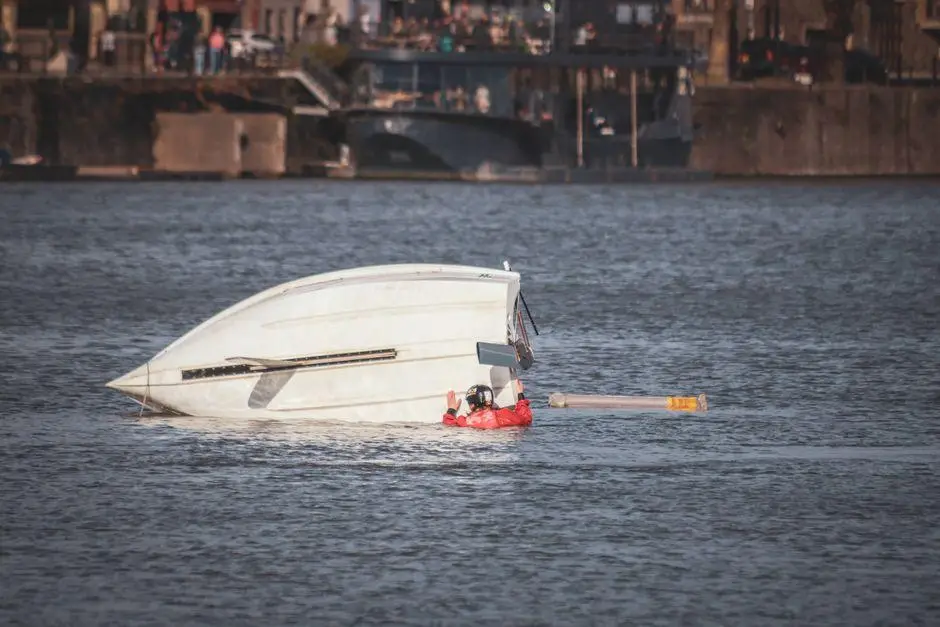
Overloading causes its own category of harm. Too much weight, or weight distributed badly, leaves a vessel unstable in conditions it would otherwise handle. Waves taken over the bow or stern swamp smaller craft quickly. Capsizing follows the same pattern and accounts for a large share of drownings, including in vessels moving under human power alone.
Injuries That Take Months or Years to Recover From
The injuries produced by these incidents tend toward the severe. Impact at speed against water, against another vessel, or against a fixed structure transfers force the body is not built to absorb. Head injuries, spinal damage, and multiple fractures are common outcomes rather than unusual ones.
Contact with a propeller produces the most catastrophic results of all. Deep lacerations, loss of limbs, and fatal outcomes follow from a person in the water being struck, often after a fall overboard or when an operator maneuvers near swimmers without knowing they are there.
Near drowning carries consequences that do not resolve when the person is pulled out. Oxygen deprivation can leave lasting cognitive and neurological effects that only become clear weeks later. Families often find that the initial relief of survival gives way to a much longer and more uncertain road.
What Passengers and Swimmers Are Most Exposed To
The people at greatest risk are usually those with the least control. Passengers cannot see what the operator sees and cannot correct a bad decision. Swimmers are lower in the water, harder to spot, and entirely dependent on the awareness of everyone operating nearby.
Life jackets remain the single clearest dividing line in outcomes. The overwhelming majority of drowning victims were not wearing one. They are frequently on board, stowed somewhere accessible, and simply not worn because conditions seemed calm and the trip seemed short.
Children face compounded exposure. They tire faster, are harder to see, and cannot always signal distress in a way adults recognize in time. Supervision that would be adequate on land is not adequate on water, where a few seconds of inattention changes everything.
The Financial Weight That Follows a Sudden Injury
The financial impact arrives faster than most families expect. Emergency treatment, imaging, surgery, and hospitalization generate costs immediately, while income stops at the same moment. Two pressures move in opposite directions at once, and that is what makes the aftermath so destabilizing.
Longer-term costs are harder to see clearly at the start. Ongoing therapy, home modifications, adaptive equipment, and diminished earning capacity extend far past the point where acute treatment ends. A permanent limitation that prevents someone from returning to the work they trained for represents a loss measured in decades.
Losses that carry no invoice matter too. Pain, emotional distress, and the loss of companionship a family once had are real consequences, even though no bill quantifies them. Families navigating this stretch do better when they document thoroughly and understand early that the full picture takes time to emerge.