
Pool ownership is expensive, including equipment, chemicals, seasonal upkeep, and inevitable repairs; costs rarely remain predictable. One bad pump failure or a heater that gives out mid-season can turn a $200 maintenance month into a $2,000 headache. That’s why a growing number of pool owners are treating home warranties less like a luxury and more like a practical line of defense.
Knowing what that coverage actually includes, and where it falls short, changes how you buy, maintain, and think about your pool altogether.
What Home Warranties Typically Cover
Home warranties are service contracts, not insurance policies. They cover repair or replacement costs when home systems and appliances break down from normal use. Most standard plans include HVAC, plumbing, electrical, and major kitchen appliances. Pool coverage is almost always sold separately as an optional add-on, and not every provider offers it.
Before committing to any plan, read the terms. A well-structured swimming pool home warranty can cover the pump motor, filter system, heater, and pool sweep, giving you a clear path to repairs without having to absorb the full cost yourself. That said, not every plan includes all of those components, so the fine print matters more than the marketing.
Common Pool Components That Fail
Most pool owners don’t think about the equipment until something stops working. By then, they’re already staring at a repair bill.
Pump and Motor
The pump runs for hours every single day. Constant operation means constant wear, and motor failures are one of the most frequent service calls in pool maintenance. Depending on the unit and labor, replacement can run anywhere from $500 to $1,200.
Filter System
Filters do the unglamorous work of keeping the water clean. Cartridge, sand, and DE filters each have different maintenance cycles and failure points. When a housing cracks or internal components break down, the repair cost is rarely trivial.
Pool Heater
Corrosion, ignition problems, and heat exchanger failures—gas and electric heaters have several ways to go wrong. A new heater installed can cost between $1,500 and $4,000. That’s the kind of bill where warranty coverage earns its keep fast.
Automated Systems and Pool Sweeps
Automation adds real convenience to pool ownership, but it also adds more components that can malfunction. Coverage for these varies widely across providers, so check before you assume they’re included.
How to Choose the Right Pool Warranty Coverage
Here’s the thing: not all pool warranty add-ons are built the same. The plan that looks affordable upfront can leave you underprotected when you actually file a claim.
Coverage Limits
Most plans cap payouts per component or per contract year. If your heater costs $3,500 to replace but the plan only covers $1,500, you’re still writing a large check. Look for plans with generous per-component limits, or ideally, no cap at all.
Exclusions
Cosmetic damage, pre-existing conditions, improper installation, and structural issues, such as the pool shell or decking, are commonly excluded. Some of these exclusions are standard and reasonable. Others are surprisingly broad. Read every line before signing.
Service Fees
Each time a technician is dispatched, most warranties charge a service call fee, typically between $75 and $150. It’s easy to overlook this when comparing plan prices, but it adds up over multiple claims.
Claim Process
Turnaround times and claim transparency vary significantly between providers. When reviewing feedback from other customers, look specifically for comments about pool-related claims, not just general appliance service. Those two experiences can be completely different.
Maintaining Your Pool to Keep Coverage Valid
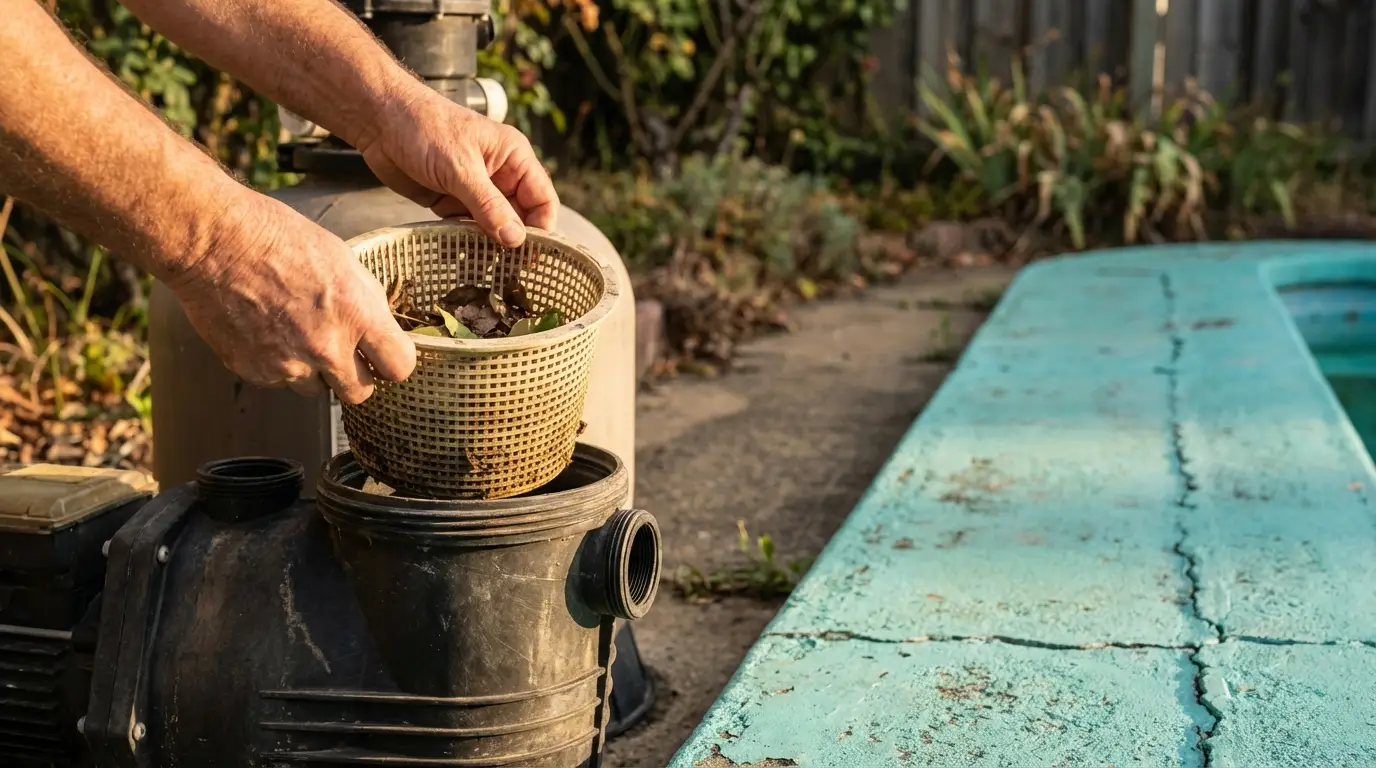
Most people don’t realize that a warranty claim can be denied if the pool hasn’t been properly maintained. It’s written into most contracts. Skip too much routine upkeep, and the warranty company has grounds to reject the claim, regardless of what caused the failure.
A basic maintenance log goes a long way. Write down when you checked water chemistry, cleaned the filter, cleared pump baskets, and had any professional service completed. If a dispute comes up during a claim, that paper trail can make the difference between approval and denial.
The core tasks to keep current: balance your water chemistry at least weekly, backwash or clean the filter on schedule, inspect pump baskets regularly, run the pump for the daily hours your system requires, and schedule a professional inspection at least once a year. None of this is complicated, but skipping it consistently creates real problems.
What a Warranty Does Not Replace
A home warranty is not a catch-all. Structural damage, such as cracks caused by ground movement or a fallen tree, is covered by homeowners’ insurance, not a warranty contract. So does damage from neglect, poor winterization, or anything deemed outside normal wear and tear.
The right way to think about it: a warranty covers mechanical and electrical failures from regular use. Paired with a solid homeowners’ insurance policy, it fills a specific gap rather than replacing everything else.
The Bottom Line
Pool equipment doesn’t last forever. The pump, the heater, the filter—all of it has a lifespan, and breakdowns are a question of timing, not possibility. A home warranty with pool coverage won’t prevent those failures, but it changes what they cost you.
Compare the plans carefully, understand what’s excluded, and keep your maintenance current. For pool owners who want real financial protection, not just peace of mind on paper, that combination is worth the effort.