Every office lobby, hospital wing, and restaurant floor depends on restrooms that work without interruption. Heavy foot traffic places constant pressure on pipes, fixtures, and surfaces, and minor faults tend to compound quietly. A slow leak or a temperamental flush valve rarely stays minor for long. Facility managers who spot these early signals save themselves considerable repair bills and operational headaches. Here’s a closer look at the issues that show up most often in commercial bathroom systems.
Persistent Plumbing Leaks
A dripping faucet barely registers as a concern on a busy Monday morning. Give that same drip a few weeks, though, and utility costs climb noticeably. Concealed leaks behind walls or beneath flooring are far worse. They invite mold colonies and weaken structural materials long before anyone sees visible damage.
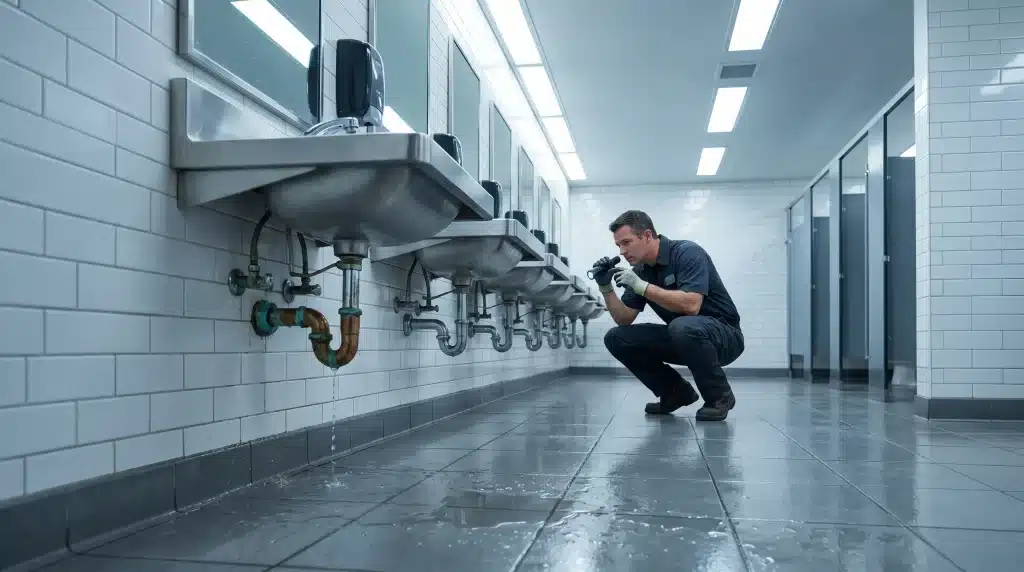
Hard water deposits, aging gaskets, and corroded joints at pipe connections tend to be the primary causes. Facilities with high occupancy put extra stress on valves and supply lines, accelerating that wear. Scheduled inspections at regular intervals identify these failures while they are still inexpensive to fix.
Clogged Drains and Sewer Line Backups
Few restroom problems create as much immediate disruption as a backed-up drain. Paper products, accumulated soap residue, and foreign objects gradually narrow sink and floor drain openings. Left unaddressed, the blockage can reach the main sewer line and force an entire restroom closure.
Trained technicians offering commercial bathroom repair services typically locate obstructions through camera inspections and clear them with hydro-jetting equipment. Acting quickly on drainage slowdowns prevents water damage to adjacent flooring and keeps facilities open for building occupants throughout the day.
Malfunctioning Flush Valves and Sensors
Automatic flush systems have become the standard across commercial restrooms for good reason. They reduce physical contact and support better hygiene. Still, the technology introduces maintenance demands.
Sensor Calibration Issues
Motion sensors drift out of alignment with extended use. An improperly aimed sensor may fire phantom flushes repeatedly or ignore a user altogether. Both outcomes waste water or leave a fixture in an unsanitary condition. Recalibrating the sensor module, or swapping it entirely, usually corrects the behavior.
Worn Diaphragms and Seals
Internal valve components cycle thousands of times each month. A degraded diaphragm produces weak flushes that fail to clear the bowl properly. Replacing these parts on a preventive rotation, rather than waiting for a complete failure, keeps performance reliable.
Faucet and Fixture Deterioration
A commercial faucet may handle several thousand activations in a single week. That volume grinds down cartridges, clogs aerators, and loosens handles faster than residential equivalents. Symptoms include erratic water temperature, reduced flow at the spout, and visible corrosion on metal surfaces.
Touchless models add a layer of convenience but bring upkeep needs. A dead sensor battery takes an entire sink station offline. Keeping a small stock of replacement batteries and cartridges on-site cuts the time each repair takes considerably.
Tile, Grout, and Surface Damage
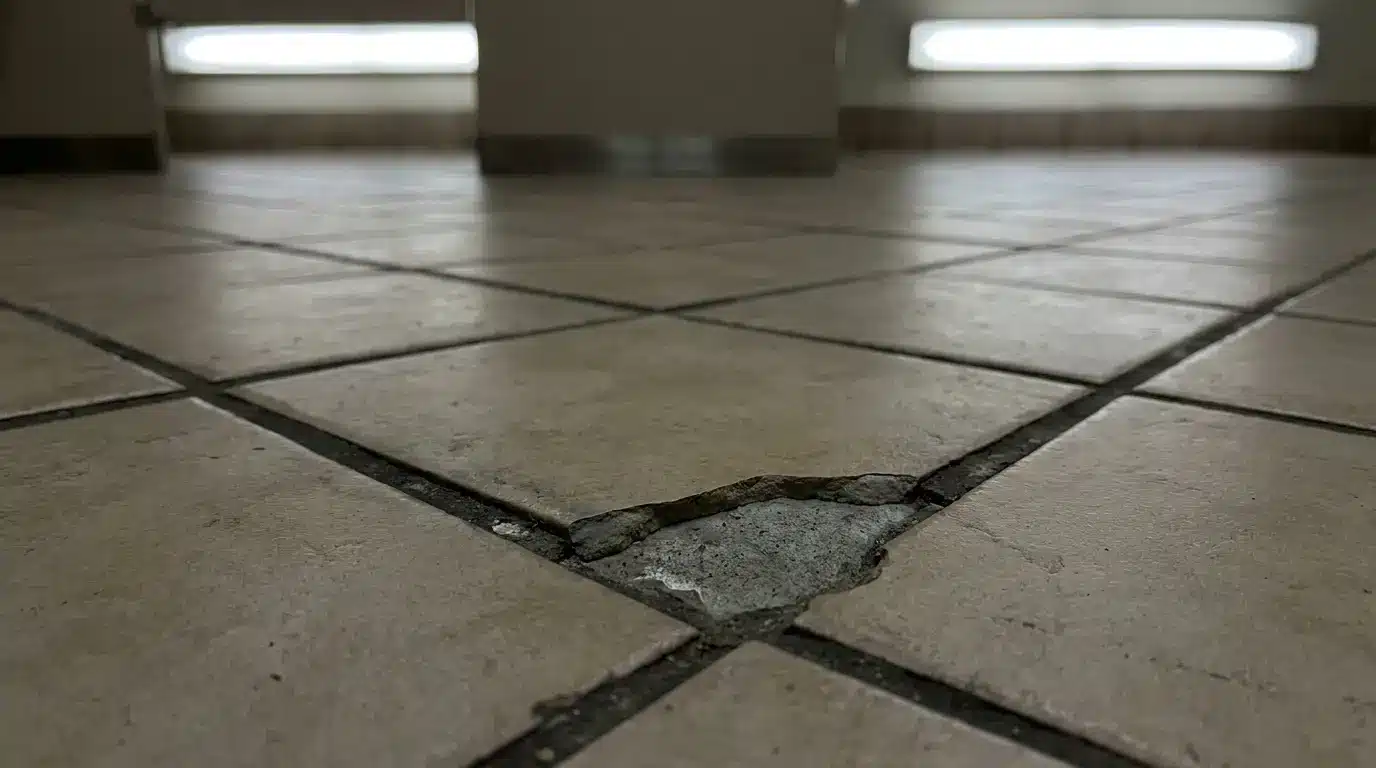
Restroom floors and walls absorb moisture, chemical cleaners, and constant foot traffic day after day. Cracked tiles become trip hazards and open a path for water to penetrate the subfloor. Grout lines that have started to deteriorate trap bacteria and produce lingering odors that no amount of air freshener can mask.
Regrouting affected sections and swapping cracked tiles at the earliest sign of damage protects the layers underneath. Applying a commercial-grade sealant after the repair extends surface life and makes daily cleaning far more effective.
Ventilation and Odor Control Failures
Adequate airflow does two critical jobs: it pulls excess humidity out of the space and carries odors toward the exhaust. An underperforming fan lets moisture linger on ceilings and walls, creating ideal conditions for mildew. Stale, damp air also makes the restroom unpleasant for anyone who walks in.
Blocked ductwork, aging fan motors, and units that were undersized from the start are the most frequent offenders. Replacing filters on a set schedule and inspecting fan assemblies keeps exhaust volume matched to the restroom’s actual occupancy level.
Water Heater and Temperature Inconsistencies
Unreliable hot water does more than frustrate visitors. It undermines handwashing compliance, which is a genuine health concern in hospitals, food service buildings, and schools. Temperature swings during peak hours usually point to sediment buildup inside the tank, a failing thermostat, or a heater that doesn’t suit the building’s true demand.
Flushing the tank once a year clears mineral deposits that reduce heating efficiency over time. Upgrading to a properly sized unit eliminates those uncomfortable cold-water surges during the busiest parts of the day.
Conclusion
Keeping commercial bathrooms functional, safe, and hygienic takes steady attention rather than occasional emergency calls. Leaking pipes, blocked drains, failing sensors, and deteriorating surfaces each carry the potential to shut down a restroom at the worst possible moment. A consistent maintenance schedule paired with prompt repairs and timely equipment upgrades helps facility managers stay one step ahead. That ongoing commitment protects your building’s investment and ensures a clean, reliable experience for every person who uses the space.