Election night 2000 started with Al Gore calling George W. Bush to concede. Then he called back to take it back.
What followed was 36 days of legal chaos that changed American politics.
Why Al Gore conceded after fighting so hard comes down to one moment.
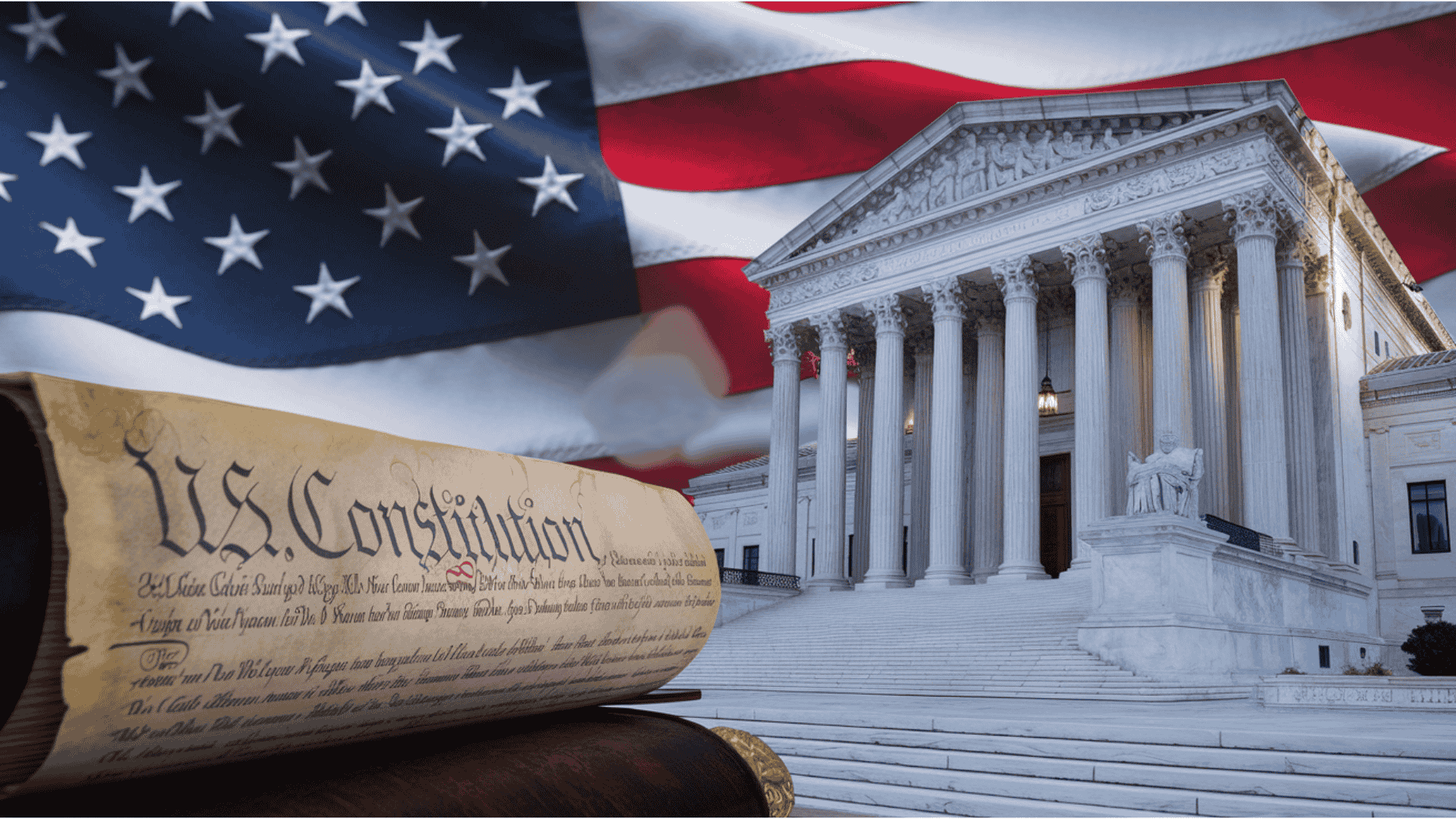
The Supreme Court stopped the Florida recount on December 12, 2000. Gore disagreed with the decision.
But he accepted it for the country’s sake.
Election Night Chaos
November 7, 2000, was supposed to be simple. Americans would vote. Networks would call a winner. Someone would become president.
It didn’t work that way. Television networks called Florida for Gore around 8 p.m. Then they retracted it. Around 2:15 a.m., they called Florida for Bush. Gore conceded at 2:30 a.m.
But Gore’s advisers kept watching the numbers. Bush’s lead in Florida was only about 600 votes. Out of nearly six million ballots cast, that margin was razor-thin.
At 3:30 a.m., Gore called Bush back. He retracted his concession. Bush was reportedly stunned. The race was too close to call.
Gore had won the national popular vote by more than 500,000 votes. But the presidency hung in the balance on Florida’s 25 electoral votes. The state’s final count would decide everything.
The Automatic Recount
Florida law required an automatic machine recount. The initial count showed Bush ahead by 1,784 votes. That margin was less than 0.5 percent.
The machine recount began on November 8. By November 10, Bush’s lead had dropped to just 327 votes. Gore’s team saw an opening.
Florida’s voting system had problems. Many counties used punch-card ballots. Voters pushed a stylus through pre-scored holes. Sometimes the holes didn’t punch all the way through. These were called “hanging chads.”
Voting machines couldn’t read ballots with hanging chads. These ballots were labeled “undervotes.” Thousands of them existed across Florida.
Gore requested manual recounts in four counties. Miami-Dade, Broward, Palm Beach, and Volusia all leaned Democratic. Gore believed hand counts would find votes the machines missed.
The Legal Battle Begins
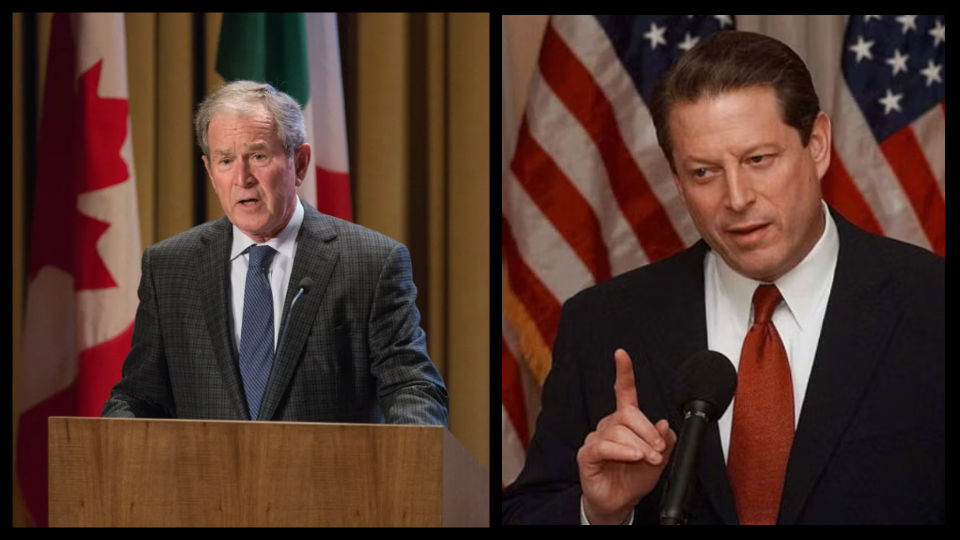
alt text: George W. Bush and Al Gore speaking during the 2000 election legal battle
Both campaigns sent lawyers to Florida. James Baker led Bush’s legal team. Warren Christopher headed Gore’s effort. The battle moved to the courts.
Florida Secretary of State Katherine Harris set a November 14 deadline for county results. She had been Bush’s Florida campaign co-chair. This raised conflict-of-interest questions.
The Florida Supreme Court extended the deadline to November 26. Some counties finished their recounts. Others didn’t have time. On November 26, Harris certified Bush as the winner by 537 votes.
Gore filed a formal contest the next day. He argued that thousands of legal votes remained uncounted. The case went to Leon County Circuit Court.
Judge N. Sanders Sauls rejected Gore’s contest on December 4. Gore appealed to the Florida Supreme Court. Meanwhile, Bush’s legal team prepared for every scenario.
The Florida Supreme Court Decision
On December 8, the Florida Supreme Court ruled for Gore. The 4-3 decision ordered a statewide manual recount of all undervotes. More than 61,000 ballots needed to be examined.
The court said these ballots could change the outcome. Under Florida law, any ballot showing clear voter intent should count. The recount had to begin immediately.
Gore’s team was thrilled. They finally had what they wanted. A full statewide recount might find enough votes to win.
Bush’s lawyers appealed to the U.S. Supreme Court. They requested an emergency stay to stop the recount. The recount began around 4 p.m. on December 8. It lasted only a few hours.
The Supreme Court Steps In
On December 9, the U.S. Supreme Court granted Bush’s stay request. The recount stopped. Justice Antonin Scalia wrote a concurring opinion. He argued that counting legally questionable votes would harm Bush.
The Court scheduled oral arguments for December 11. Both sides had one day to prepare. The justices faced a tight deadline. Federal law set December 12 as the “safe harbor” date. States had to finalize their electors by then.
The Court issued its decision on December 12 at 10 p.m. The ruling was complex. Seven justices agreed the recount violated the Equal Protection Clause. Different counties used different standards to judge voter intent. Some counted dimpled chads. Others required punched holes.
This inconsistency created unequal treatment. Five justices ruled there was no time to fix the problem. The December 12 deadline had arrived. No constitutional recount could be completed.
The 5-4 decision effectively ended the election. Bush remained Florida’s certified winner. The Court remanded the case back to Florida. But everyone knew it was over.
Why Gore Conceded
Gore’s legal team discussed their options. Technically, the Supreme Court hadn’t dismissed the case. The Florida Supreme Court could defy the ruling. They could create new recount standards.
But Gore’s advisers were realistic. Even if Florida ordered a new recount, Bush would appeal again. The Supreme Court would likely block it again. The fight could drag on indefinitely.
Gore also considered the country’s well-being. The election had already consumed 36 days. Partisan anger was rising. Some worried about the legitimacy of American democracy.
Gore had served eight years as vice president under Bill Clinton. Their partnership, which began with Clinton’s unconventional VP selection in 1992, had been highly successful. Now his political career was ending in controversy.
On December 13, Gore gave his concession speech. He spoke from the Eisenhower Executive Office Building in Washington. His wife, Tipper, and running mate, Joe Lieberman, stood beside him.
“While I strongly disagree with the court’s decision, I accept it,” Gore said. He emphasized that partisan rancor must be put aside. For the country’s unity, he offered his concession.
Gore called Bush to congratulate him. He promised he wouldn’t call back this time. The joke referenced election night when he had retracted his first concession.
What Gore Did Next
Gore left elected office but didn’t retreat from public life. He spent several months with his family. Then he began focusing on environmental activism.
[INSERT LINK TO TOPIC 3 HERE] His climate change work eventually earned him recognition at the highest levels. His dedication to environmental causes became his defining legacy after politics.
The 2000 election loss freed him to pursue issues he cared about. He gave speeches worldwide. He advised companies on climate policy. He wrote books about environmental challenges.
Some wondered if he would run again in 2004 or 2008. Gore ruled it out. His life had moved in a different direction. Politics was behind him.
His personal life also evolved significantly in the years following the election. Today, Gore maintains a relatively private personal life while continuing his environmental advocacy work.
The Controversy That Never Ended
The 2000 election remains controversial. Studies later showed the outcome depended on which recount method was used. A full statewide recount of all ballots might have given Gore the win.
But his legal team never requested that approach. They focused only on undervotes in specific counties. Some argue Gore’s legal strategy cost him the presidency.
Justice Sandra Day O’Connor later expressed regrets. In 2013, she said the Court maybe shouldn’t have taken the case. Justice Antonin Scalia defended it until his death.
The decision shaped American politics for decades. It raised questions about voting rights, equal protection, and the role of courts in elections. The 2000 race showed how fragile democracy can be.
Conclusion
Why Al Gore conceded came down to accepting reality. The Supreme Court had spoken. Fighting on would only damage the country. Gore put democracy above his ambition.
The 36-day battle taught Americans hard lessons about election systems. Florida’s voting problems became a national concern. Many states updated their equipment and procedures.
Gore lost by 537 votes in Florida. He won the popular vote by more than 500,000 nationally.
His concession speech emphasized unity over personal disappointment.
That grace under pressure defined his final political moment.