A great outdoor space doesn’t happen by accident. It comes from a simple, practical plan that matches how you relax, cook, and host. With a few smart layout moves, you can turn any patio or deck into a calm, flexible zone that works day to day.
Smart Zoning Starts With A Simple Sketch
Start by splitting your space into 3 clear zones: lounging, dining, and cooking. Think about where the sun hits and where you want quiet vs. conversation.
The easiest way to get moving is to sketch it on paper – then refine the plan with a quick tape outline on the ground. Your layout will feel more personal when it reflects local building styles and weather, and you can get real-world guidance from Patio Builders in Indianapolis, or somewhere else local, right as you shape the plan. Use that feedback to place the grilling zone near the kitchen door, and keep the dining area close but not crowded.
A few inches here and there make a big difference in daily comfort.
Circulation Paths That Keep The Space Calm
Good circulation is what makes an outdoor room feel easy. Leave clear walkways between zones so people aren’t cutting through your lounge to reach the grill. When paths are obvious, the space feels organized and stress drops.
Design editors advise keeping at least 1 meter around furniture and between areas for smooth movement.
That guideline is simple to apply and prevents the most common pinch points. Try it with painter’s tape before buying furniture, and you’ll quickly see where to trim or shift pieces for better flow.
Shade And Shelter Boost Daily Usability
Your relaxing zone should work at noon in July and at 6 p.m. in September. Shade is the first step, and a mix of overhead cover and movable elements gives you control. Umbrellas, pergolas, and tall planting can all work together without making the space feel heavy.
Homes & Gardens points out that a louvered pergola lets you dial in shade and light with a quick flip of a switch.
That means you can read without glare, then open things up when the evening cools off. If a pergola isn’t in the cards, use a pair of offset umbrellas to cover the dining table and a corner of the lounge.
Heat, Light, And Season Stretchers
Plan for warmth and lighting as you plan for furniture. A small fire pit or patio heater can extend your season well into fall, and soft path lighting keeps the yard safe without glare. Put outlets where you actually lounge so cords don’t cross walkways.
A recent feature on Houzz noted that adding a fire feature, roof cover, or patio heater can extend alfresco time later into the evening and deeper into the year.
Place heat sources near where people sit, not in the middle of a path. For lighting, layer string lights, low path lights, and a dimmable sconce near doors so you can switch scenes fast.
Furniture Footprints That Actually Fit
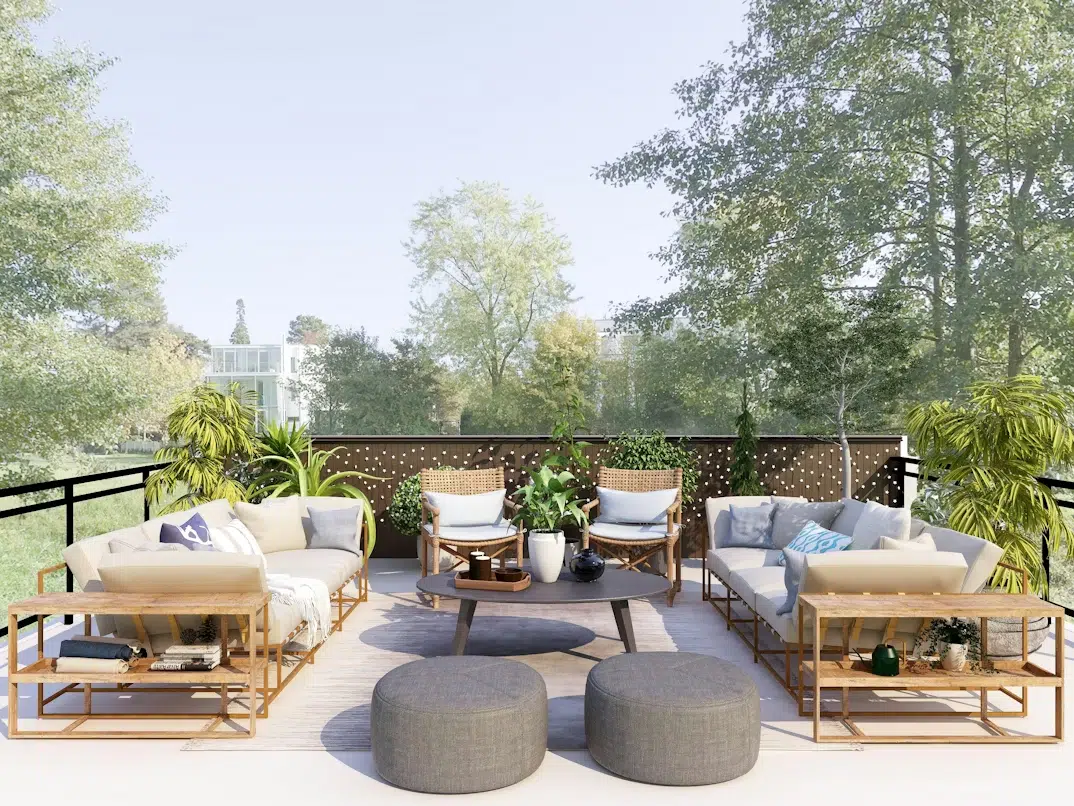
Before you buy, measure your real-life furniture footprint. The coffee table, side tables, and ottoman all count. When pieces fit the plan, your lounge feels generous instead of cramped. Choose a sofa length that leaves room for a walkway behind or beside it.
Think about how chairs swivel and slide. Leave enough space for feet and bags without pushing the seating too far apart. If you’re on a compact patio, pick a single deep sofa paired with 2 light chairs. That gives you flexible seating without a wall of furniture.
- Map each item’s width and depth on the ground with tape
- Test chair pull-out space and a full walk-around path
- Keep at least 1 small surface within reach of every seat
- Scale the rug to connect the group, not swallow it
Flexible Zones For Guests And Quiet Time
A practical plan shifts with your day. Use movable stools and nesting side tables to grow the seating circle for guests. When it’s just you, tuck those pieces against a wall to clear space and calm the view. Flexibility is the secret to a patio that always feels ready.
Think vertical as well as horizontal. A slim storage bench handles cushions and throws, and it doubles as extra seating when friends stop by.
Keep a rolling bar cart near the dining zone so drinks don’t clog the cooking area. With a few mobile pieces, your plan adapts without a full reset.
Water, Plants, And The Quiet Corner
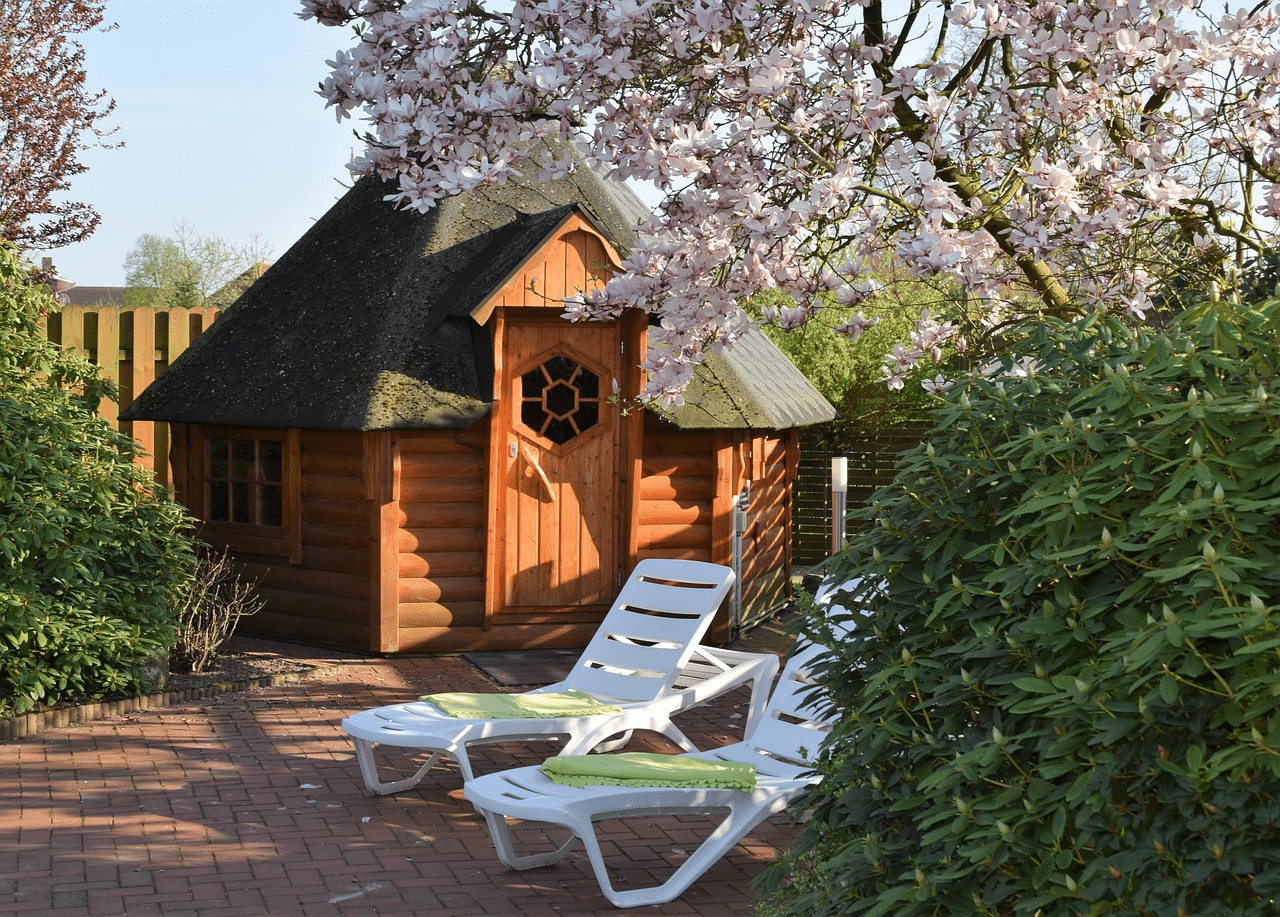
Sound matters outdoors. A small water feature can mask street noise and turn a simple corner into a retreat. Pair it with a single lounge chair and a shaded reading light to create a personal landing spot away from the main flow.
Planting shapes the plan. Use taller grasses or shrubs to edge the lounge and define the dining area. You get privacy without a hard wall. Keep lower plantings near walkways so steps feel open and safe at night.
A thoughtful floor plan is the fastest way to upgrade how your outdoor space feels. Start with zones, give people room to move, and add comfort layers like shade, heat, and soft light.
Once the layout works, every chair, plant, and lamp earns its spot – and your open-air relaxing zone becomes the place you actually use.