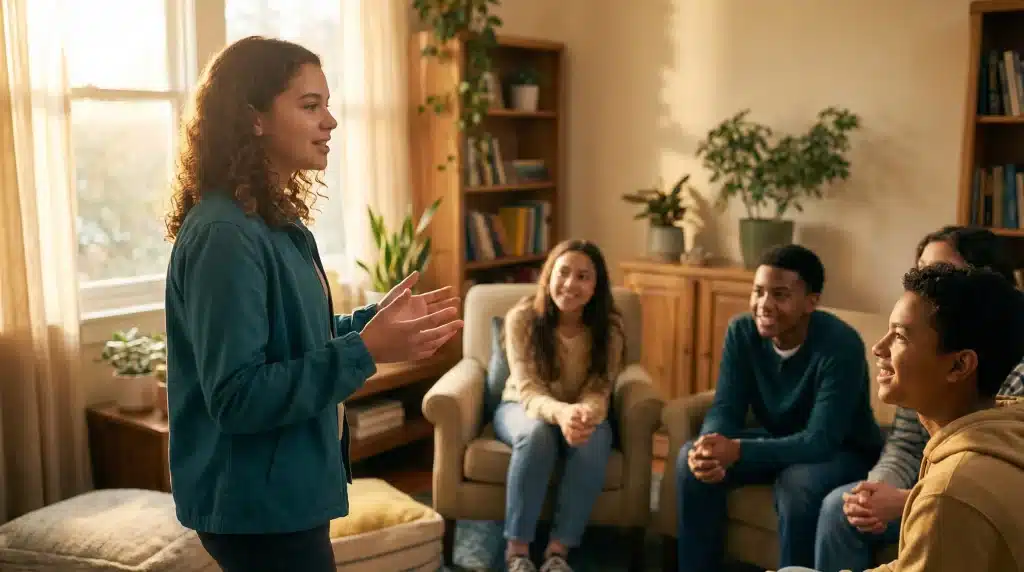
Being a teenager is hard enough without the added pressure of not knowing what to say or how to say it. Some teens go quiet in class. Others avoid phone calls, dodge group projects, or freeze during school presentations. These are not signs of laziness or attitude. They are signs that teen communication skills need support. The good news is that these skills can be learned, practiced, and sharpened at any age.
Social Communication Is More Than Just Talking
Most people think communication means speaking clearly. For teens, the real challenge is often social communication. That means knowing when to speak, how to read the room, and what the unspoken rules are in a conversation.
Reading Body Language and Tone
A big part of social communication happens without words. Facial expressions, posture, eye contact, and tone of voice carry just as much meaning as the words themselves. Teens who miss these cues often feel lost in group settings. They may talk too long, interrupt without realizing it, or miss sarcasm entirely. These are not personality flaws. They are pragmatic language gaps that can be closed with the right guidance.
Taking Turns and Staying on Topic
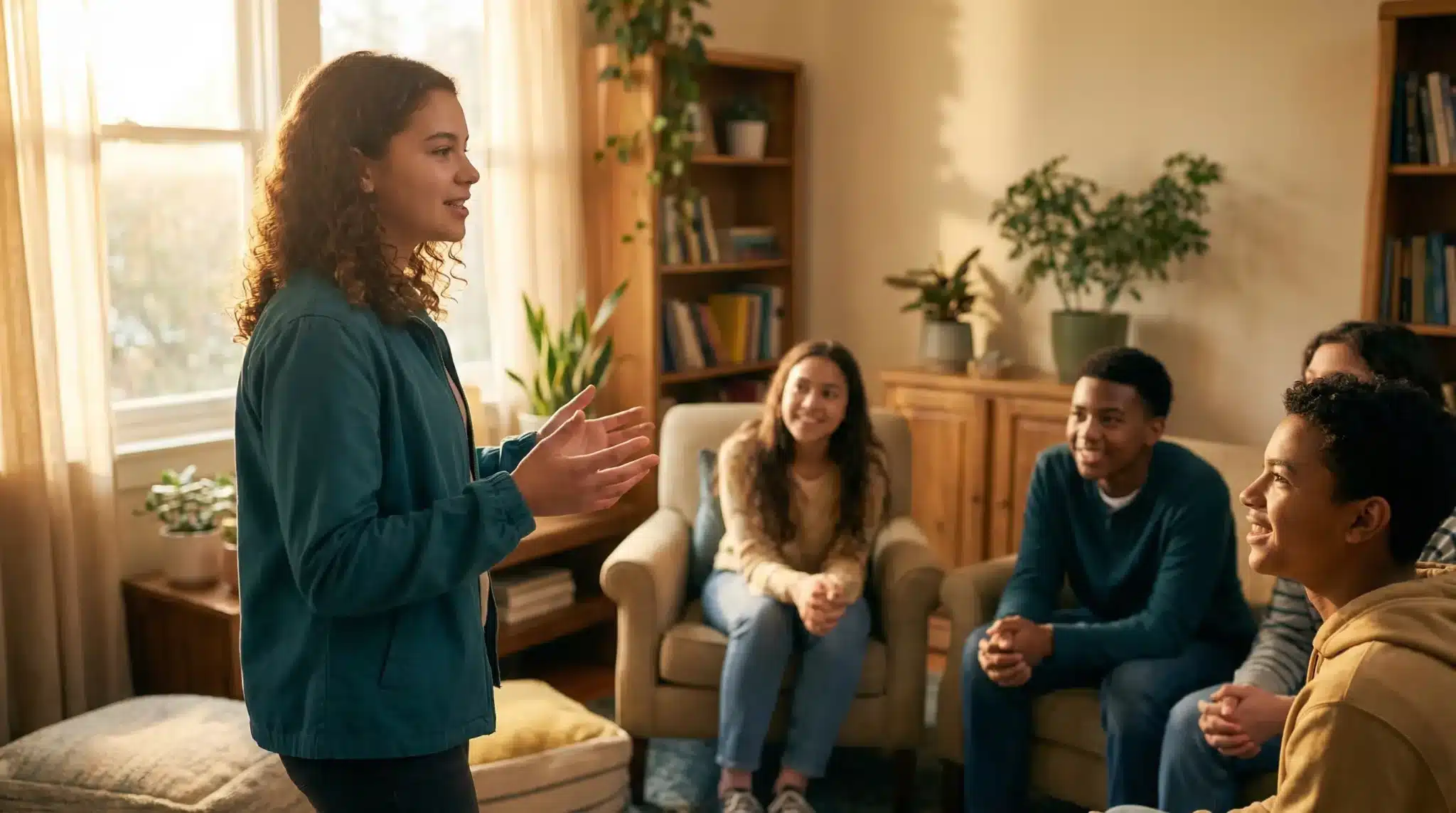
Conversation has a rhythm. One person talks, the other listens, then they switch. Some teens struggle with this flow. They may jump from topic to topic or go silent because they are not sure when it is their turn to speak. Practicing conversation skills in low-pressure settings helps build that rhythm until it feels natural.
Public Speaking Anxiety Hits Teens Harder Than Most Adults

Standing in front of a class is terrifying for a lot of teens. Public speaking anxiety is one of the most common fears at any age, but it peaks during the teenage years when self-awareness is at its highest.
The Physical Side of Stage Fright
Racing heart, shaky hands, dry mouth, and a blank mind. These are not just nerves. They are a stress response. The teen’s brain reads the situation as a threat and floods the body with adrenaline. Understanding this reaction is the first step toward managing it. Once a teen learns that the shaking is not a sign of failure, they can start working through it instead of running from it.
School presentations do not have to be a source of dread. Small steps help. Practice in front of one person first. Then two. Then a small group. Build up slowly so the brain learns that speaking in front of others is safe. Confidence follows repetition, not the other way around.
Stuttering in Teens Deserves More Than “Just Relax”
Telling a teen who stutters to slow down or relax does more harm than good. Stuttering is a speech pattern rooted in how the brain processes language. It is not caused by nervousness, and it cannot be fixed by willpower alone.
Teens who stutter often develop avoidance habits. They swap out words they know will trip them up. They let others finish their sentences. They stay quiet in class even when they know the answer. Over time, this avoidance chips away at their confidence and shrinks their world. Working with a speech language pathologist gives them tools to manage their speech without hiding from it. The goal is not to eliminate every stutter. It is to help the teen communicate freely without fear.
Pragmatic Language and Why Some Teens Struggle Socially
Pragmatic language is the set of social rules that govern how we use words in real life. It covers things like how close to stand during a conversation, how to greet someone, how to ask for help, and how to shift tone depending on who you are talking to.
Some teens pick this up without thinking. Others need it taught directly. Teens on the autism spectrum, teens with ADHD, and teens with language processing differences often find pragmatic language difficult. They are not being rude or awkward on purpose. Their brains process social information differently, and they benefit from clear, direct coaching on what the social expectations are. Teens who get this kind of support, whether through school programs or providers who offer speech therapy for teenagers, often see quick gains in how they connect with peers and adults.
Building Conversation Skills That Last Beyond High School
The communication habits a teen builds now follow them into college, jobs, and relationships. Investing in conversation skills early pays off for years.
Start at home. Ask open-ended questions at dinner. Let your teen order their own food at a restaurant. Encourage them to make their own phone calls for appointments. These small moments build real-world practice without the pressure of a classroom audience.
Teens also benefit from structured practice. Drama clubs, debate teams, and group volunteer work all create safe spaces to try new ways of speaking and listening. The key is consistency. One conversation workshop will not change much. Regular practice over weeks and months rewires how a teen approaches speaking up. The quiet kid who dreads being called on in September can become the one who raises their hand by spring. It just takes the right support and enough reps to make it stick.