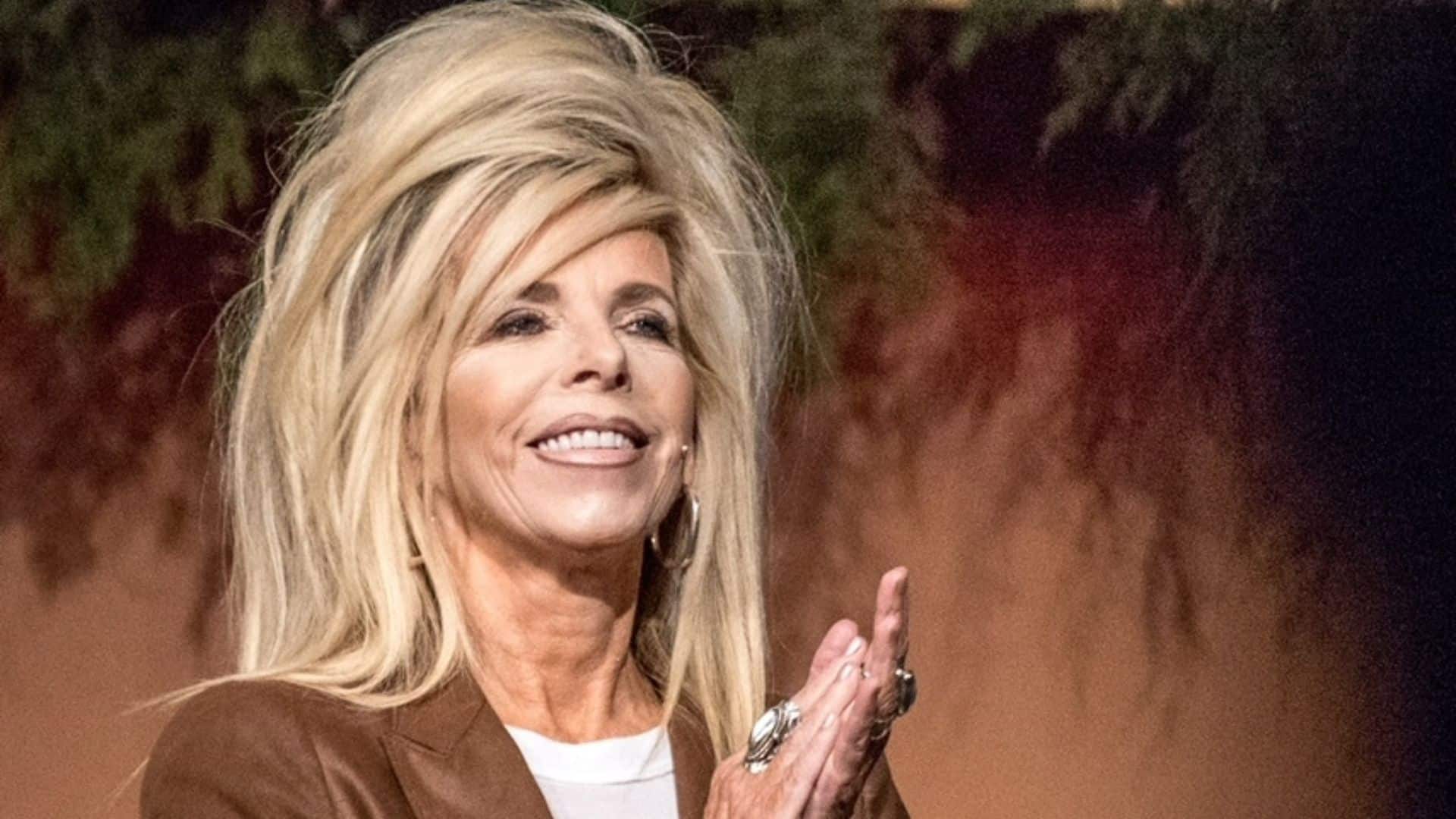
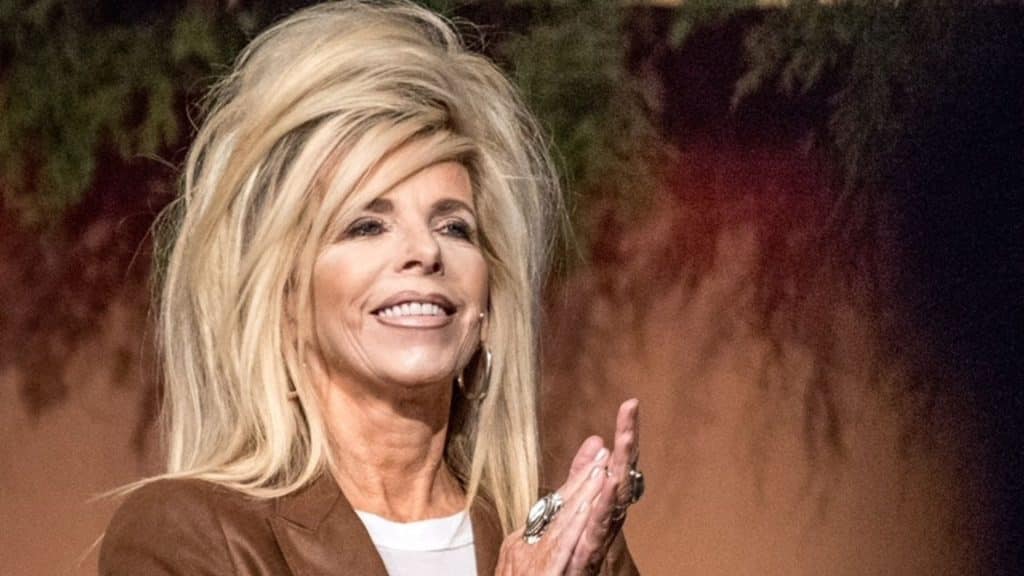
Few things defined Gwen Shamblin’s public image as immediately as her hair. Before people fully absorbed her message, they noticed the volume.
Towering, teased, platinum blonde, it was a look that sparked curiosity, jokes, admiration, and genuine confusion all at once.
For years, viewers, followers, and critics asked the same question: was that real? And what on earth did it mean?
To understand the hair, you first have to understand the woman behind it.
Gwen Shamblin Lara (born February 18, 1955) was a registered dietitian who built a faith-based weight-loss empire, first through the Weigh Down Workshop she founded in 1986, and later through Remnant Fellowship Church, established in 1999.
But of everything that defined her public persona, nothing was more immediately recognizable than the hair.
The Early Look: Natural and Understated
In the early 1990s, Gwen Shamblin looked nothing like the larger-than-life figure she would become.
Her hairstyle at that time was natural and relatively modest, a short blonde cut that curved inward to frame her face.
It was a straightforward look suited to a dietitian and small-group leader running local weight-loss workshops out of a Memphis retail space.
This was still a period when Weigh Down was a grassroots program, not yet a national phenomenon. By 1994, the workshops had expanded to around 600 churches in 35 U.S. states.
The growth was exciting, but Gwen had not yet stepped fully into the role of spiritual leader and media personality. Her look reflected that: professional, polished, but not theatrical.
That began to change as her profile grew.
By the time The Weigh Down Diet was published by Doubleday in 1997 and became a bestseller with over 1.2 million copies sold, Gwen was making appearances on major television programs, including 20/20, Larry King Live, and The View.
The platform was getting bigger, and so was the hair.
The Transformation: When the Hair Became the Brand
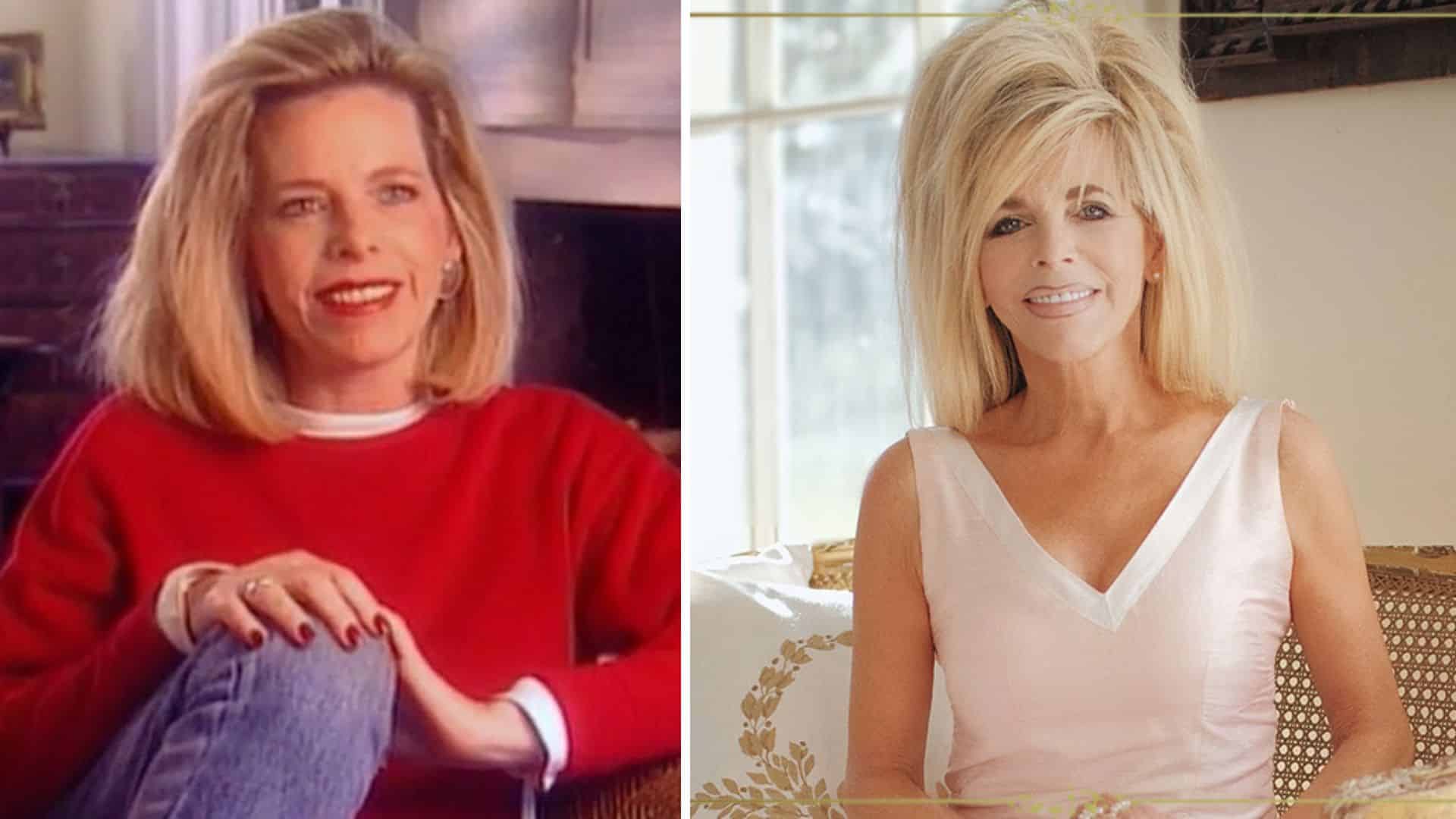
By the 2000s, something had changed dramatically. Gwen’s hairstyle began to grow taller in a way that simple styling choices could not explain.
The bouffant grew taller. The tease became more pronounced. The platinum tone became more deliberate.
Viewers who tracked her appearances across years noted that the bigger her church grew, the bigger her hair became, and the correlation was hard to ignore.
The HBO Max docuseries The Way Down: God, Greed, and the Cult of Gwen Shamblin, released in September 2021, brought this transformation to a global audience.
Footage spanning more than three decades showed the clear progression: from a natural shortcut in the early 1990s to a vertigo-inducing tower of frosted blonde by the late 2010s.
Social media responded immediately. Twitter users described the hair as reaching remarkable foot-high beehive proportions. One viewer captured the mood perfectly: “The bigger the hair, the closer to God.”
Jennifer Grey, who portrayed Gwen in the 2023 Lifetime film Gwen Shamblin: Starving for Salvation, offered a psychological interpretation.
Grey said she believed body dysmorphia was at the root of Gwen’s evolving look.
Speaking to TODAY, she noted that as Gwen became thinner over the years, her hair moved in the opposite direction upward and outward, suggesting a disconnection from reality.
Grey added that Gwen appeared unable to recognize that her hairstyle had become extraordinary.
What made this especially striking is that the hair was changing in parallel with her face and body.
As her frame became increasingly gaunt and her cheekbones more pronounced, changes that later fueled widespread surgery rumors, the hair compensated by going in the opposite direction.
The overall effect was a figure that looked simultaneously shrinking and enormous.
The Wig Question: Real Hair or Styled Illusion?
The wig claims have circulated online for years, largely fueled by the sheer improbability of the look. Could natural hair actually do that?
Observers on forums and social media speculated about everything from hair extensions and clip-ins to full wigs built over a structural foundation.
Some commenters suggested she used a “rat,” a piece of foam or fabric pinned under natural hair to create lift, combined with clip-in hairpieces to achieve the signature height.
No direct evidence has been confirmed that Gwen Shamblin wore a wig in her regular public life. She never publicly addressed the speculation.
What is known is that her look required significant effort and product. Former church members and observers described a meticulously maintained appearance that was clearly intentional and carefully constructed.
The wig conversation received an unexpected boost when Jennifer Grey began preparing for the Lifetime film. Grey revealed she alternated between two separate wigs during production.
The first was the same blonde wig worn by Jamie Lee Curtis in the 1978 film Halloween, adjusted to approximate Gwen’s earlier look.
The second was built from scratch, hair by hair, and modified depending on the scene to reach the more extreme heights associated with Gwen’s later years.
Grey mentioned that hair and makeup preparation alone required two hours every day before she could even begin filming.
The fact that a professional production required two custom human-hair wigs and two hours of daily preparation to replicate the look tells its own story about how extraordinary that hairstyle actually was.
What the Hair Said About Gwen
The hair was not incidental. Filmmakers who documented Gwen’s story were direct about its symbolic weight.
Documentary filmmaker Nile Cappello noted that while people found humor in Gwen’s hair and makeup, it served as a mask, a carefully constructed façade that projected authority, confidence, and presence.
In a faith-based movement built entirely on her personal charisma, that distinction mattered enormously.
Whether the volume came from extensions, structural padding, or remarkable styling skill, the effect was the same: Gwen Shamblin looked like no one else in the room.
In a church that revolved around her personality and her direct relationship with God, standing apart visually reinforced her standing spiritually.
Her hair became so culturally recognizable that even her Lifetime movie biography was effectively promoted through its recreation.
When Jennifer Grey posted her transformation photo in November 2022, showing the voluminous blonde wig and dramatic makeup, responses from Grey’s Hollywood peers and fans were immediate and widespread.
The hair preceded the story.
The Legacy of the Look
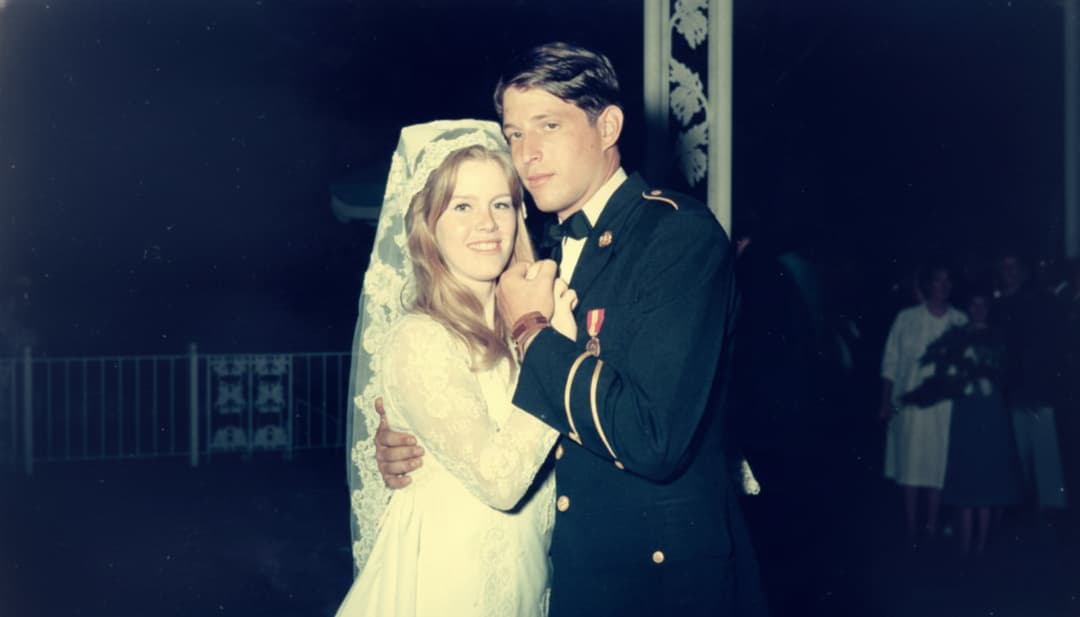
Gwen Shamblin died on May 29, 2021, when the Cessna Citation 501 piloted by her husband, Joe Lara, the former Tarzan actor, whom she had married just three years earlier after a surprise divorce from her first husband of 40 years, crashed into Percy Priest Lake shortly after takeoff. She was 66 years old.
In the aftermath of her death, discussions of her hair became intertwined with broader reflections on her persona, her power, and the psychology of cult leadership.
The hair remains one of the most discussed aspects of her public image, not because it was superficial, but because it was inseparable from who she presented herself to be.
It grew as her influence grew. It became more extreme as her theology became more extreme. Whether it was wigs, extensions, or sheer dedication to backcombing, the volume was real in every sense that mattered.