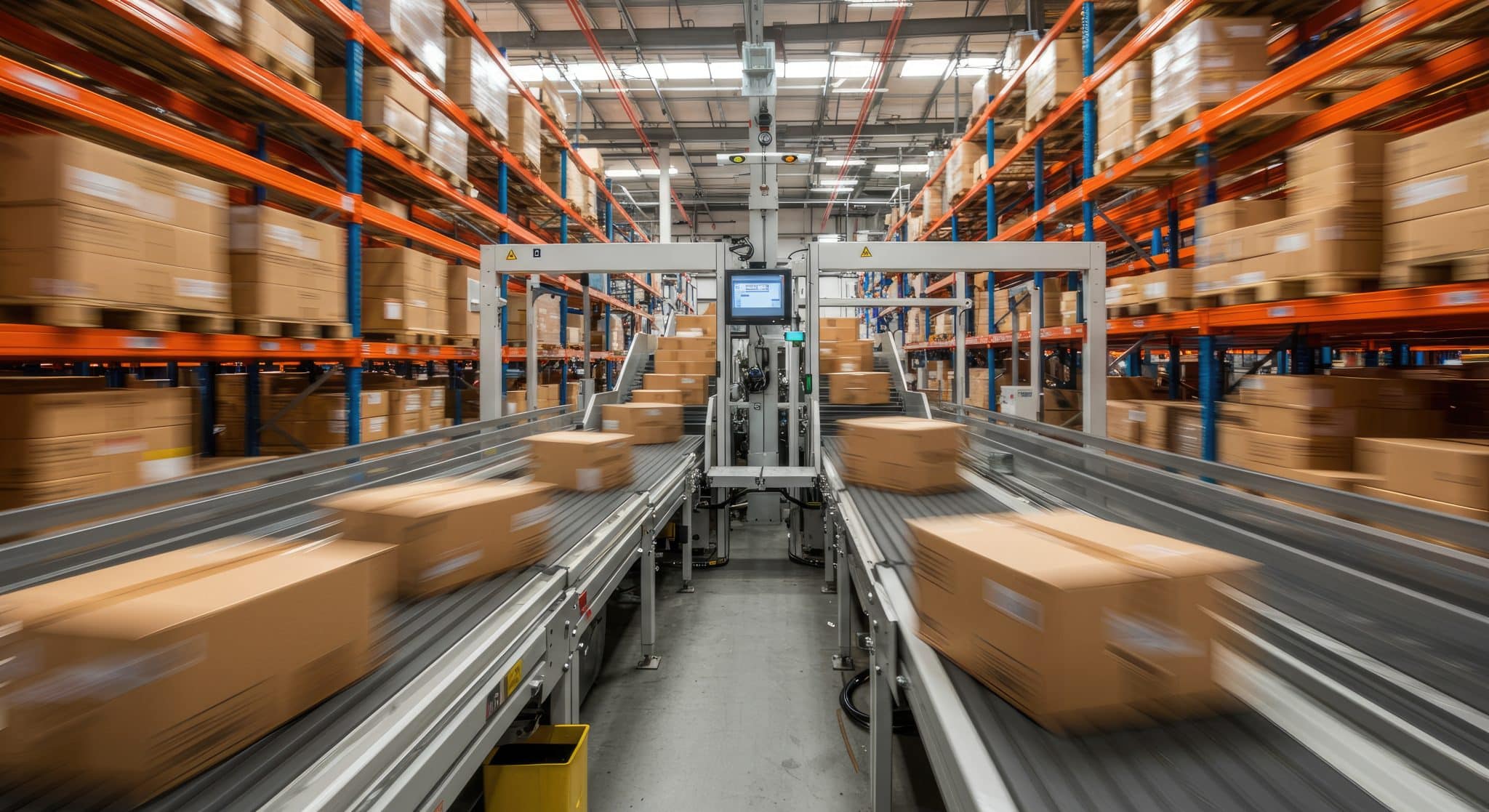
Go-live is a milestone, not the finish line. It’s the moment warehouse automation moves from project success to day-to-day reality, where staffing shifts, seasonal surges, and small process changes shape outcomes. Over time, ROI depends less on what was installed and more on how warehouse operations manage drift, wear, and variability.
That’s why the post-implementation phase needs its own playbook. A high-performance warehouse automation environment doesn’t stay high-performing by default. It stays strong when teams build habits around visibility, proactive intervention, and disciplined change control.
The Post-Implementation Peril in Warehouse Automation: The “Set and Forget” Fallacy
- ROI leakage often starts after the “hyper-care” window ends. The first weeks post-go-live typically involve heightened attention and rapid support. As that intensity fades, small problems can linger longer and become normalized inside warehouse operations.
- Performance usually degrades by a thousand small cuts. Most facilities don’t experience a single catastrophic failure. They face micro-stops, intermittent sensor faults, recurring jams, minor alignment issues, and process workarounds that add up across shifts.
- Success criteria change faster than the system does. Order profiles shift, carton quality varies, new SKUs arrive, packaging changes, and staffing fluctuates. If control settings and operating routines stay static, warehouse operations absorb the mismatch.
- Retail volatility makes drift more expensive. Grocery logistics is time-compressed. Fashion retail logistics is mix-compressed. Both reduce tolerance for minor disruptions because they accumulate quickly under peak constraints.
- Workarounds become process. Operators solve the moment, which is understandable, but repeated shortcuts can introduce variability that later manifests as recurring jams, exceptions, or inconsistent flow.
- Reactive repair is not a strategy. Transitioning to lifecycle asset management means treating system health as part of warehouse operations, not something handled only when something breaks.
Maximizing Technical Availability and System Health for Warehouse Operations
Technical availability is the bedrock of fulfillment. When automated flow stutters, the business impact appears fast: missed cutoffs, labor rebalancing, overtime, and a growing backlog that’s hard to unwind. Even when everything “works,” micro-stops and slow recoveries quietly drain capacity.
The practical point for leaders is this: availability isn’t only a maintenance metric. It’s an operational reliability metric that influences service levels, labor planning, and cost-to-ship.
What “good” looks like after go-live
Strong warehouse operations build an operating rhythm around system health:
- Visibility: trending the signals that precede disruption (not just alarms).
- Response discipline: consistent triage rules and clear ownership.
- Repeat-issue elimination: fewer “same problem, new shift” failures.
- Change control: changes are tested, documented, and evaluated against performance baselines.
Where many operations struggle is not commitment, it’s consistency. The same recurring stop may be “fixed” in the moment, only to reappear a week later because the underlying pattern wasn’t captured, categorized, and permanently resolved. Over time, this creates an expensive cycle: repeated interventions, resets, and conversations about why throughput feels tighter even though the system is technically still running.
Why remote monitoring and diagnostics change the curve
Remote monitoring and diagnostics work best when they move teams from reacting to failures to managing patterns. That means tracking indicators such as recurring fault codes, jam frequency by zone, sensor anomaly rates, or control behaviors that correlate with micro-stops. When those patterns are visible, interventions can be planned around operational windows rather than triggered mid-peak.
This is also where teams gain operational leverage. Instead of debating whether a problem is “maintenance” or “operations,” data makes it clear whether the source is mechanical wear, sensing instability, control logic behavior, or process input variability (such as inconsistent induction, damaged cartons, or changes in packaging materials). That clarity accelerates decision-making and reduces time spent troubleshooting the same symptoms.
This is also where the brief’s point lands: maintaining high uptime keeps the warehouse a reliable node in the broader supply chain, especially when upstream and downstream partners have limited tolerance for delay.
The “1% availability” idea, without hype
A 1% availability drop sounds small until it’s mapped to peak volume. In high-throughput facilities, small disruptions can translate into a meaningful backlog, with cascading impacts across warehouse operations: labor is pulled into exception handling, outbound staging compresses, and dock execution tightens. The goal isn’t perfection, it’s predictability and fast recovery, particularly during the narrow windows when retail networks make or miss their commitments.
The Strategic Value of Lifecycle Logistics Services

- Holistic logistics services encompass more than grease and wrenches. They also include data-driven performance audits and software optimization, which is important because many post-go-live losses stem from drift, not a single dramatic failure.
- Resident engineer models can reduce recurrence. On-site experts who learn a facility’s unique “fingerprint” (throughput patterns, peak behaviors, product quirks) can spot recurring failure modes more quickly and shorten the path to root cause.
- Spare parts management is a financial strategy. It’s a balancing act between carrying cost and the far higher cost of an extended system halt. Smart policies prioritize parts that can stop flow, have long lead times, or are known wear drivers.
- One example (and the only one here): TGW Logistics frames lifecycle support around proactive technical management, including remote monitoring and diagnostics, with the intent of helping automated warehouse operations stay stable as order profiles and volume patterns shift.
Optimizing Inbound and Outbound Fluidity
Lifecycle services must also address synchronization across the entire facility, because misalignment between inbound and outbound can make automation appear to be the bottleneck when the real issue is flow timing and buffering discipline.
Retail logistics reality (grocery + fashion): Both grocery logistics and fashion retail logistics face volatility, just in different forms. Grocery peaks compress time and tolerance for delay. Fashion peaks compress, mix, and add complexity. In both cases, warehouse operations benefit from the same fundamentals: clean induction standards, disciplined replenishment cadence, stable sensing, and control logic that matches real product behavior.
The most common “silent” constraint is variability entering the system. When inbound quality is inconsistent, automation spends more time recovering than flowing. A few practical examples show up across retail environments:
- Inconsistent load building creates receiving surges that flood staging and choke replenishment timing.
- Packaging variability increases misreads and handling exceptions, which in turn raise intervention rates.
- Returns and rework loops consume capacity unpredictably, especially when reverse flows spike.
Reducing cycle time from dock to stock often comes down to fine-tuning PLC logic and sensor sensitivity to eliminate micro-stops that add up to significant hourly delays. When those micro-stops are reduced, inbound becomes more predictable, outbound gets more time, and labor spends less effort on “keeping the line moving” work that doesn’t add customer value.
From an operating standpoint, the win is not just speed. It’s stability. Stable inbound feeding supports stable automation behavior, which supports stable outbound execution. That stability protects ROI by reducing the need for overtime, last-minute labor redeployment, and late-stage firefighting at the dock.
Performance upgrades can also extend a facility’s lifespan. Retrofitting legacy automation with modern sensors or improved logic can extend usable performance by years and keep warehouse operations aligned with new service expectations.
Automation as a Living Investment
- Automation is a dynamic system that requires expert stewardship to reach its full financial potential.
- The true cost of ownership is not found in the purchase price, but in the efficiency maintained over the next fifteen years, especially as warehouse operations evolve with volume, labor realities, and demand variability.
- A practical next step for leaders is to benchmark post-go-live readiness by monitoring coverage, diagnostic discipline, repeat-issue elimination, and the ability to maintain performance stability as business conditions change.