A 5-carat cushion cut set sideways on Zendaya’s finger changed what thousands of couples typed into search bars this year. The ring, designed by Jessica McCormack, placed an elongated diamond in an east-west orientation, a setting style that had existed for decades but rarely appeared on anyone famous enough to make it trend. Within weeks, jewelers reported increased interest in horizontal settings and cushion cuts. This is how the engagement ring market works now: celebrity moments create ripples that show up in sales data months later.
The average engagement ring cost in 2025 sits at $6,504, according to industry tracking. This figure dropped from $6,775 in 2024 and remains well below the $9,025 peak recorded in 2022. The Knot’s 2024 Jewelry and Engagement Study, which surveyed over 7,000 recently engaged couples, places the average lower at $5,200, a reminder that methodology shapes these numbers considerably. One 2025 report pegged the average budget at $8,580, which tells you more about who responded to the survey than about what people actually spend.
Nearly two-thirds of buyers spend less than $6,000. A third spend under $3,000. These figures rarely make headlines because they contradict the impression left by celebrity rings and social media posts.
How Lab-Grown Diamonds Changed the Math
Lab-grown diamonds now cost 50% less than their natural counterparts on average. The numbers break down to $5,188 for lab-grown versus $10,760 for natural stones of comparable quality. This gap has widened over the past three years as production scaled and prices dropped.
Buyers who choose lab-grown diamonds often allocate the savings toward larger carat weights or more elaborate settings. The visual result can be a bigger ring for less money, which appeals to couples working within specific budgets. Meanwhile, buyers who prioritize natural diamonds have been trading up, according to the Natural Diamond Council’s 2025 report. The average American spent $7,364 on natural diamond jewelry in 2025, supported by a 10% rise in average prices. Specialty jeweler sales of natural diamonds grew 2.1% during the same period.
Color grades have become a priority regardless of diamond origin. D-F colored diamonds, the top three grades on the color scale, make up 53% of all diamond engagement ring purchases. Buyers appear willing to compromise on other factors before they compromise on color.
Elongated Shapes Beyond the Oval
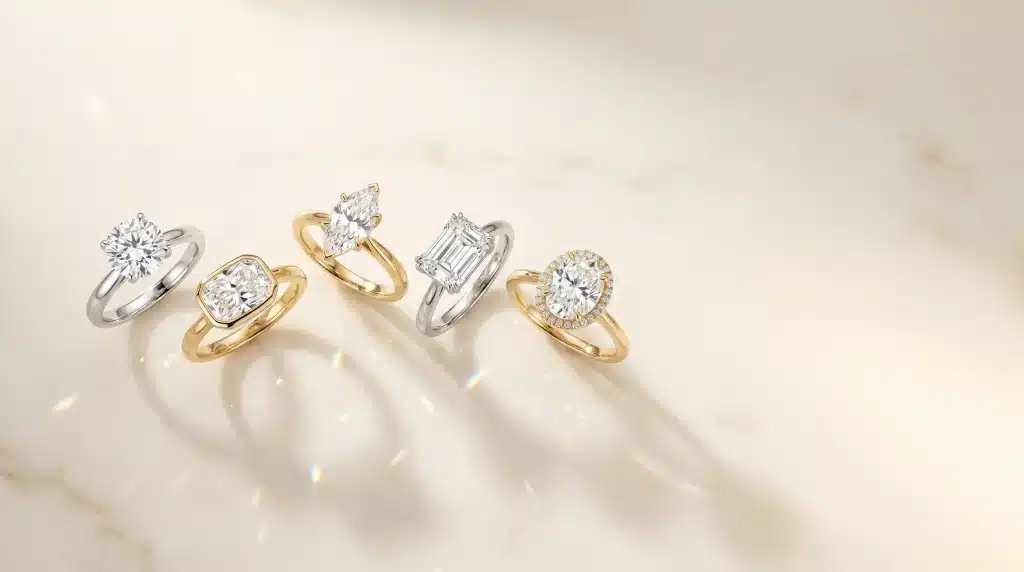
Round brilliants still account for 62% of diamond engagement ring sales, but buyers looking for finger-lengthening silhouettes have started moving past the oval. Marquise cuts posted 12% growth in 2025, and the emerald cut diamond ring followed with 7% gains year over year. Selena Gomez wore a marquise solitaire set in yellow gold, while Zendaya chose an elongated cushion in an east-west orientation designed by Jessica McCormack.
The shift suggests that couples want shapes that stand apart from the oval trend that dominated announcement photos in recent years. Cushion, marquise, and emerald options offer similar proportions with distinct faceting patterns and visual profiles.
The Oval Correction
Oval diamonds held 16% of the market in 2024. That share dropped to 14% in 2025. The decline is modest, but it marks the first reversal after years of consistent gains. Oval cuts became synonymous with engagement rings on social media platforms, which may have contributed to their pullback. Some couples now view them as too common or too expected.
The round brilliant absorbed none of this defection. Its 62% market share held steady, suggesting that buyers leaving ovals moved toward other elongated shapes rather than back to classics. Marquise and emerald cuts offered the finger-lengthening proportions that made ovals popular while providing visual distinction.
Jacqueline Kennedy Onassis wore a marquise engagement ring decades before Selena Gomez did the same in 2025. The shape carries historical associations that may appeal to buyers seeking something with precedent but without oversaturation.
Carat Weights Keep Climbing
The average total carat weight for an engagement ring reached 1.16 carats in 2025, according to the Natural Diamond Council. This continues a steady upward pattern observed over the past several years. In 2021, the average carat weight sat at 1.5 carats. By 2024, it reached 1.7 carats. The methodological differences between these figures make direct comparison difficult, but the direction remains consistent.
Pieces with center stones between 2.00 and 2.24 carats grew 9% in 2025, building on an 18% gain the year before. Larger stones have become more accessible through lab-grown options and through financing arrangements that spread costs over time.
More than 70% of engagement ring buyers report carrying some form of debt. Only 28.4% say they have none. These numbers provide context for how couples fund purchases that average several thousand dollars.
Yellow Gold Returns to Parity
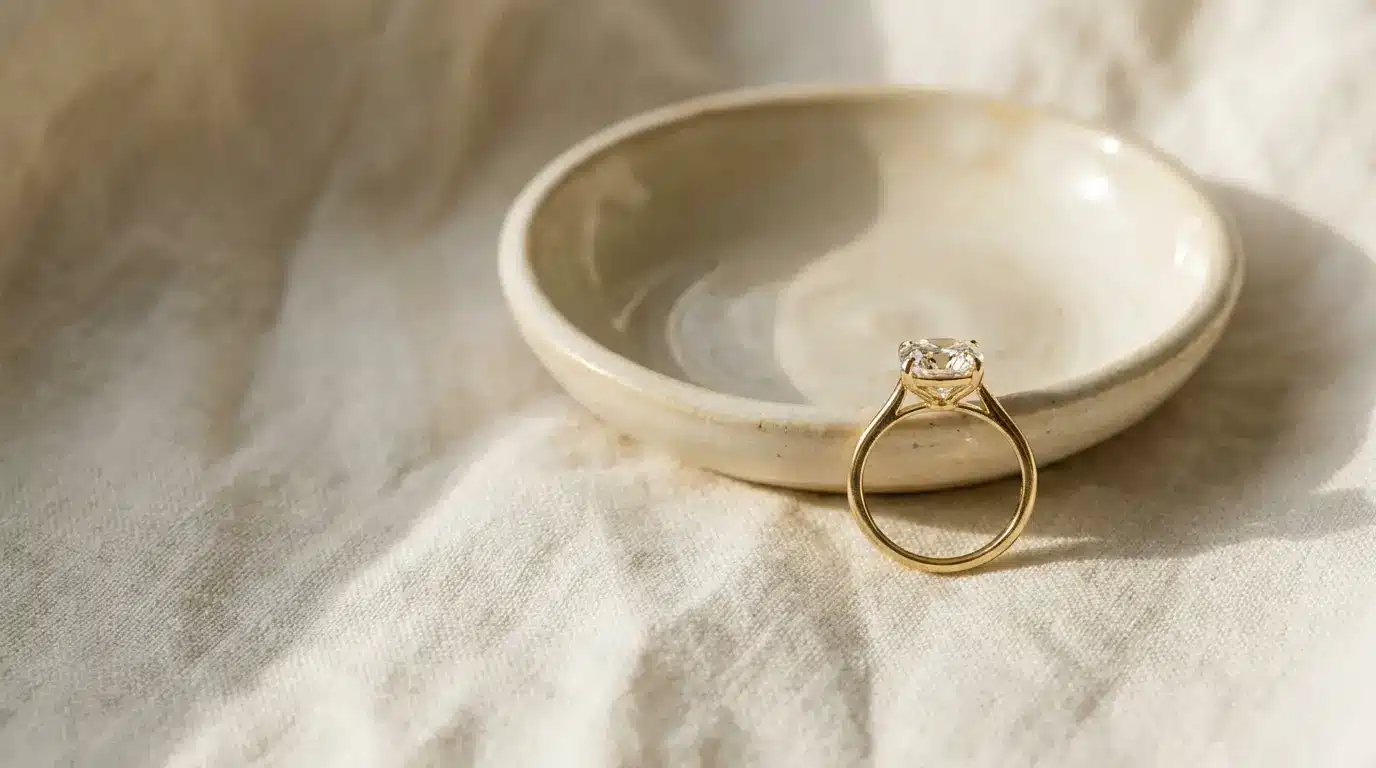
Yellow gold engagement rings now match white gold in popularity for the first time in years. Data from 2024 shows yellow gold appearing in 36% of all engagement rings, up from 9% in 2017. That represents a fourfold increase in seven years.
Taylor Swift’s engagement ring contributed to this pattern. Jewelry experts who examined photos of the ring described it as an antique elongated cushion-shaped diamond, roughly 10 carats, bezel-set in 18-karat yellow gold on a tapered, textured band. Tom Heyman, president of Oscar Heyman, told reporters that the ring would likely influence future engaged couples. Given Swift’s cultural footprint, this prediction seems reasonable.
The Georgian-style button-back setting on Zendaya’s ring also used gold, though in a warmer, more vintage presentation. Celebrity engagement rings this year shared a common thread: they favored warm metals and designs that referenced older jewelry periods.
Regional and Seasonal Patterns
Massachusetts buyers spend more on engagement rings than buyers in any other state, with an average budget of $10,817. The reasons for this are unclear from the data, though cost of living and median income likely play roles.
Couples in the United States spend an average of three and a half months actively searching for an engagement ring before purchasing. This search period often begins after informal conversations about preferences, which explains why 77% of proposees report having some involvement in the selection or purchase of their ring, according to The Knot.
The engagement season runs from November through February, with 47% of couples getting engaged during this window. Valentine’s Day marks the close of this period. Jewelers typically see increased foot traffic and online activity during these months.
What the Spending Data Reveals
The Plumb Club found that average spending on bridal jewelry reached $5,493 in their most recent survey, up 2% from 2023. This figure includes engagement rings, wedding bands, and other related purchases.
The gap between reported averages and actual buying behavior suggests that published figures skew toward higher spenders. Surveys often capture respondents who feel comfortable discussing their purchases, which may exclude buyers at the lower end of the spending distribution.
A couple spending $3,000 on an engagement ring is not an outlier. They represent roughly one-third of all buyers. The industry focus on five-figure rings and celebrity carats obscures this reality.
Reading the 2025 Data
Engagement ring trends move slowly despite the impression created by viral moments. Round brilliants have held their market position for decades and show no signs of decline. Yellow gold took seven years to climb from 9% to 36% of the market. Lab-grown diamonds required years of price drops and consumer education before reaching mainstream acceptance.
The 2025 data shows a market in adjustment rather than transformation. Buyers are spending less than they did in 2022 but more than surveys suggested they would. They prefer better color grades even when budgets tighten. They want shapes that elongate the finger without defaulting to the most obvious choice.
Celebrity influence remains measurable and immediate, but its effects layer onto slower-moving preferences. Zendaya’s east-west cushion and Taylor Swift’s yellow gold setting will appear in sales data for the next several years, gradually absorbed into the baseline of what buyers consider normal. The rings that make headlines become the rings that couples reference when explaining what they want, which becomes the inventory that jewelers stock, which becomes the market as it exists.