

Thinking that your phone bill is too high is a tale as old as time, and for good reason. Carriers tend to bundle in a bunch of stuff you didn’t ask for while somehow missing something important on every affordable plan.
So, yes. Seniors are often overpaying, but not because they “don’t get technology.” Most of the time, they overpay because the carrier makes it too convoluted to find the appropriate plan, or for fixable reasons like paying for more data than you use or letting add-ons inflate the monthly total.
The goal of this post is to help you spot those patterns and make a clean switch to dedicated wireless plans for seniors where it makes sense.
Examples of Overpaying
Overpaying isn’t necessarily about spending the most money, but simply about paying more than you need to for the way you actually use your phone.
Here are a few examples of what overpaying can look like:
- Paying for unlimited data when you’re mostly using your home Wi-Fi.
- Paying for a premium plan because you once got a “free phone” deal, even though the phone is paid off now.
- Carrying device insurance you don’t need or forgot you added.
- Keeping multiple lines “just in case,” even though one line would do the job.
- Missing discounts that apply automatically only if you ask (or switch your billing setup).
On the flip side, paying more can be reasonable if it buys reliability. If you live somewhere with spotty coverage or want a plan with strong customer support, a cheaper option that drops calls isn’t a bargain.
Modern Reality
Pew Research Center reports that 95% of U.S. adults ages 65+ own a cellphone, and 78% own a smartphone. That means most seniors are using the same kind of devices as everyone else, even if they use them differently day to day.
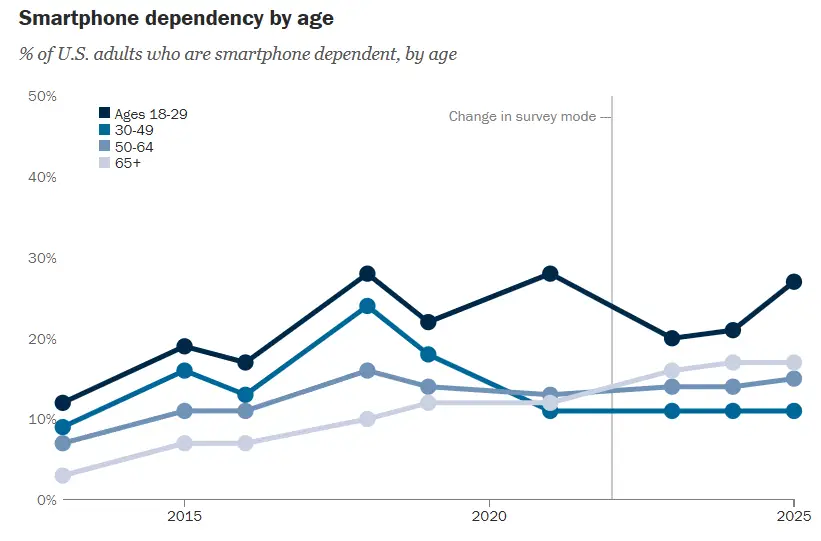
So, the type of phone might be the same, but the pattern of use often isn’t, and that mismatch is where extra costs sneak in.
Unlimited Coverage: An Expensive Mistake
Unlimited plans can be a great fit for heavy data users. But many people end up on unlimited because it was the default recommendation at the store, not because it matched their needs.
Modern smartphones are capable of burning through a lot of data quickly through video calls and auto-playing social feeds, but if you mostly use Wi-Fi at home, you may never need to worry about reaching or exceeding your data limit.
The trap is that people, and seniors in particular, pay for a plan designed for heavy cellular data use, then spend most of their time on Wi-Fi anyway.
A Phone Bill Breakdown
Before you change anything, it helps to separate your bill into buckets, because the total is often made up of several moving pieces:
1. Plan Price
Not much to explain here. This is your headline number that includes talk, text, and data.
2. Device Payments
If you’re financing a phone, your monthly total includes a device installment. The plan might look expensive when the real culprit is the phone payment.
3. Insurance and Add-Ons
Insurance, “premium support,” cloud storage upgrades, extra hotspot features, international add-ons, and security bundles can stack up.
4. Taxes and Fees
These vary by state and locality, and they can be more noticeable on certain plan types.
For a clear breakdown of your own plan, circle every line item on your bill that isn’t the plan price or the phone payment. Those are the easiest costs to trim without changing coverage.
Most Common Overpaying Patterns
In my experience reviewing family members’ bills and helping friends do quick plan audits, the same patterns repeat:
Staying on a “Grandfathered” Plan That Stopped Being a Deal Long Ago
Sometimes older plans are great, but often they’re too expensive because newer pricing has changed, and loyalty doesn’t get rewarded.
If your plan includes a lot of limits on minutes or data, but still costs a lot, it’s worth comparing.
Paying for More Data Than You Use
If you’re connected to Wi-Fi at home and you don’t stream a lot on the go, you DO NOT need an unlimited plan.
The good news is that you don’t have to guess at this either. On iPhone and Android, you can check cellular data usage in settings. Look at the last one to two months and see how much you really need.
Keeping Insurance Out of Habit
Device insurance can be smart for some people, especially if replacement costs would be a strain, but it’s often kept by default, long after the “high-risk” period has passed.
Think about whether replacing your current phone would be a blow to your personal finance at this time. Even if it would, you most likely have some type of backup option, like an older phone or a family spare to use as a temporary replacement in a worst-case scenario.
Bundles That Sound Helpful but Don’t Match Real Life
Plans sometimes bundle in entertainment subscriptions or extra cloud storage. If you already pay for those elsewhere, you can end up double-paying.
Senior-Specific Discounts and Programs Worth Checking
Some plans offer age-based discounts (often starting at 55+) or features built around safety and simplicity. There are also federal and state support programs for eligible households.
That being said, don’t assume a “senior plan” is automatically cheaper. Sometimes it is, but sometimes it’s just packaged differently, with a higher price and a nicer story.
The best thing you can do is sit down for 20 minutes and think about what you actually use your phone for. Once you have that information, you can select the most appropriate plan.
That can mean paying a little more for dependable coverage, or it can mean trimming $20–$40 a month in extras you never wanted. Either way, the idea is to stop treating your phone plan like a static utility bill. It’s a product you can renegotiate.
You’ll usually find at least one thing to fix. And if you don’t, that’s good news too. It means you’re probably already paying something close to fair.